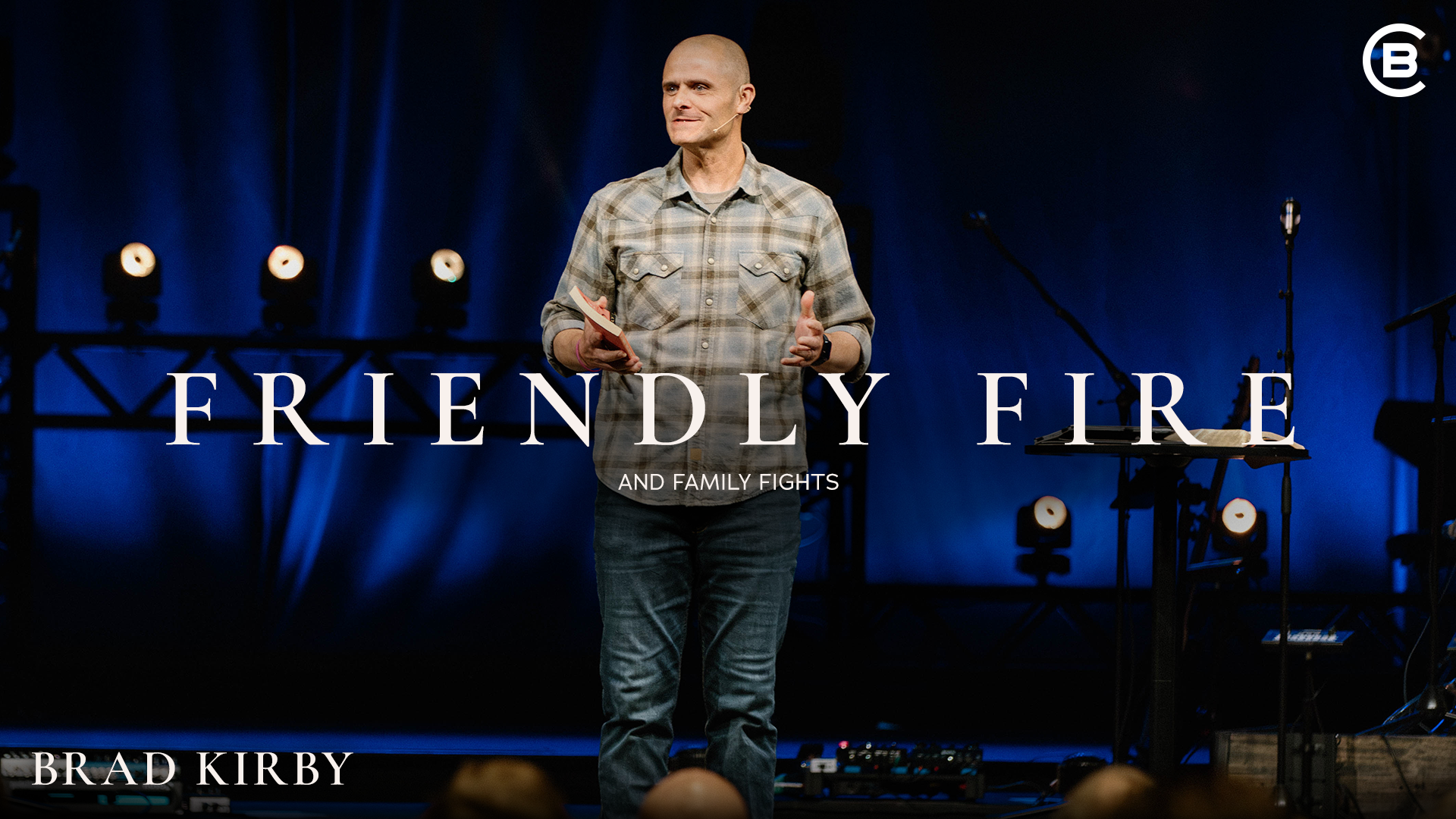
Friendly Fire and Family Fights
Sermon Notes
It is possible to win the war and still lose the peace. In Joshua 22, Israel has finally found rest after years of battle, but before the celebration even settles, they nearly go to war again, this time with their own brothers. All it took was hearing something, assuming something, and almost acting on it before they understood everything. Brad Kirby unpacks five safeguards from this chapter that protect the unity of any family, friendship, or church. Come see how a moment that looked like rebellion became a witness to what really held them together.
Key Takeaways
Remember proven faithfulness. Joshua honored the eastern tribes for keeping their word through a seven-year mission, reminding us not to erase years of loyalty over one confusing moment.
Stay watchful even in seasons of rest. After the battles were over, Joshua warned the people to keep clinging to God, because comfort tests our faith just as much as crisis does.
Ask before you accuse. Israel heard about the altar but never took the time to understand it, and Proverbs 18:13 reminds us that answering before we listen leads to folly and shame.
Confront to restore, not to destroy. Instead of attacking, Israel sent a delegation and even offered their own land, showing that godly confrontation is a rescue mission and not a wrecking ball.
Let reconciliation lead to worship. When the truth came out, the people blessed God and named the altar Witness, turning what almost divided them into a reminder of what held them together.
Discussion Questions
When have you experienced "friendly fire," a hurt that came from someone close to you rather than an outsider?
Why do you think we tend to notice what is wrong before we notice what is right in the people around us?
Is there someone in your life whose faithfulness you have been slow to recognize or celebrate?
When have you assumed the worst about someone, only to find out later there was more to the story?
What would it look like for you to ask before you accuse the next time you hear something concerning?
How does the cross shape the way you pursue peace with other believers, even when it costs you something?
This Week's Challenge
Before repeating something you heard or assuming the worst about someone this week, stop and ask them, "Help me understand."
Transcript
Friendly Fire
Mark Atteberry once wrote a book on the dumbest things Christians do, and one chapter was called "Fighting Among Ourselves." Honestly, friends, that one may belong at the top of the list. It has ended more churches and destroyed more gospel legacies than almost anything outside of persecution.
He opens that chapter with the story of Pat Tillman, the NFL player who walked away from a big contract to serve his country after 9/11. In 2004, in the chaos of a mission in Afghanistan, shots were fired and Pat was hit. As he lay wounded, he cried out, "Cease fire! Friendlies!" The bullets were coming from his own side.
Friendly fire. It is horrifying on a battlefield. It is even more tragic in the church, because nothing grieves God more than when His people attack one another.
A Chapter That Will Preach
Joshua 22 is one of those chapters many people have never read, and even if they have, few remember it. It does not have the pizazz of Jericho's walls or the sun standing still. But it may be one of the most practical chapters in the whole book.
Here is how we got here. Israel has finished fighting. God has given His people rest. The land has been divided, the tribes have their inheritance, and not one of God's good promises had failed. This is a high moment. The battles are over.
But Joshua 22 reminds us it is possible to win the war and still lose the peace. Before the dust settles, Israel almost starts another war, not with enemies outside the camp, but with their own brothers. Why? Because they heard something, assumed something, and nearly acted on it before they understood everything.
Safeguard One: Remember Proven Faithfulness
The chapter opens with Joshua honoring the tribes of Reuben, Gad, and half of Manasseh. Years earlier they had been given land on the east side of the Jordan, but they made a promise. Their fighting men would cross over and help their brothers until the land was taken.
And they kept it. For seven years these men put their own lives on hold, leaving wives, children, and farms behind. So Joshua stops and celebrates them. He does not say, "You only did what you were supposed to." He honors their loyalty, because faithful people point to a faithful God.
Here is the warning. Most of us notice what is wrong before we notice what is right. Do not erase years of faithfulness over one confusing moment. A church that remembers and celebrates faithfulness builds strength into the body.
Safeguard Two: Remain Spiritually Watchful
Joshua does not only celebrate these tribes. He also warns them. "Only be very careful," he says, and calls them to keep clinging to the Lord.
Here is the thing, friends. In my experience, seasons of peace can be more dangerous than seasons of war. When Israel was fighting, they knew they needed God. Now the battle is over and they are going home with silver, gold, and full barns. The wilderness tests us with need. Prosperity tests us with abundance.
That matters for unity, because when love for God grows cold, love for the family of God usually does too. People stop praying and start complaining. They stop serving and start criticizing. So Joshua calls them to love God, walk with Him, obey Him, cling to Him, and serve Him with everything. Church unity is safest when God's people are clinging to Jesus.
Safeguard Three: Reject Rumors
On their way home, the eastern tribes build a massive altar by the Jordan, big enough to be seen for miles. Word spreads fast. Israel hears about it, and the whole assembly gathers to make war against their own brothers.
Look how fast this escalates. One moment they are being honored for faithfulness, and the next they are suspected of rebellion. Why? Because Israel heard about the altar but never took the time to understand it. They had information, but no explanation.
That is how rumors work. They give you just enough to be dangerous and not enough to be truthful. Proverbs says if you answer before you listen, it is your folly and shame. Before you answer, hear. Before you accuse, ask. Before you go to war, get the facts. Stop letting hearsay disciple your heart.
Safeguard Four: Respond Redemptively
Thankfully, Israel does not attack. They pause and send a delegation, led by Phinehas, a man who took holiness seriously. That decision may have saved the nation. They sent representatives before arrows.
Their words were strong, and their concern was serious, because sin is serious. But even in confrontation there was a remarkable offer of grace. They told the eastern tribes, "If your land is unclean, come share ours." They were willing to give up their own space to draw their brothers back. That is costly reconciliation.
That is a good word for the church. It is easy to confront when it costs you nothing. Biblical confrontation says, "I love you enough to speak the truth, and I care enough to walk with you through it." Godly confrontation is not a wrecking ball. It is a rescue mission.
Safeguard Five: Rejoice in Reconciliation
The eastern tribes could have answered with anger. Instead, they humbly explained. They had not built the altar for sacrifices. They built it as a witness, so that future generations would never say the eastern tribes had no part in the Lord.
This is the twist of Joshua 22. The thing that looked like rebellion was actually remembrance.
When Phinehas and the leaders heard it, they were not embarrassed. They were glad to be wrong. The report was good, and the people blessed God and spoke no more of war. That is what reconciliation does. It turns accusation into relief and suspicion into joy. It turns war into worship. The end of the conflict is not that everyone calms down. The end of the conflict is worship.
The Altar Called Witness
I love the little detail at the end. The eastern tribes named the altar Witness, because it stood as a witness between them that the Lord is God.
Think about that. The very altar that almost tore them apart became the altar that reminded them what held them together. What first looked like a threat to unity became a testimony to it.
The church today has plenty of things that could divide us. Politics, preferences, backgrounds, generations, personalities, opinions. But unity is not uniformity. We do not all have to be the same. The church is a lot like Baskin-Robbins. We have vanilla, chocolate, some nutty butter pecan folks, and a few rocky road types, emphasis on rocky. But we are all still ice cream. Different stories, one Savior, one gospel, one family.
Our Greater Witness
Our greater witness is not an altar by the Jordan. It is a cross outside Jerusalem. The cross stands over the church and says, "You belong to God, and you belong to one another."
Joshua 22 points us forward to the gospel. Phinehas crossed the Jordan to prevent a war. Jesus crossed from heaven to earth to make peace. Phinehas investigated rebellion. Jesus bore our rebellion. Phinehas came back saying peace was possible. Jesus rose from the dead declaring that peace with God is secured.
Because Christ has reconciled us to God, we keep working to be reconciled to one another. We cannot celebrate the cross on Sunday and crucify each other with gossip on Monday. Let's protect the gospel legacy of this church, friends. Let's go.