Nothing Stays Buried
Sermon Notes
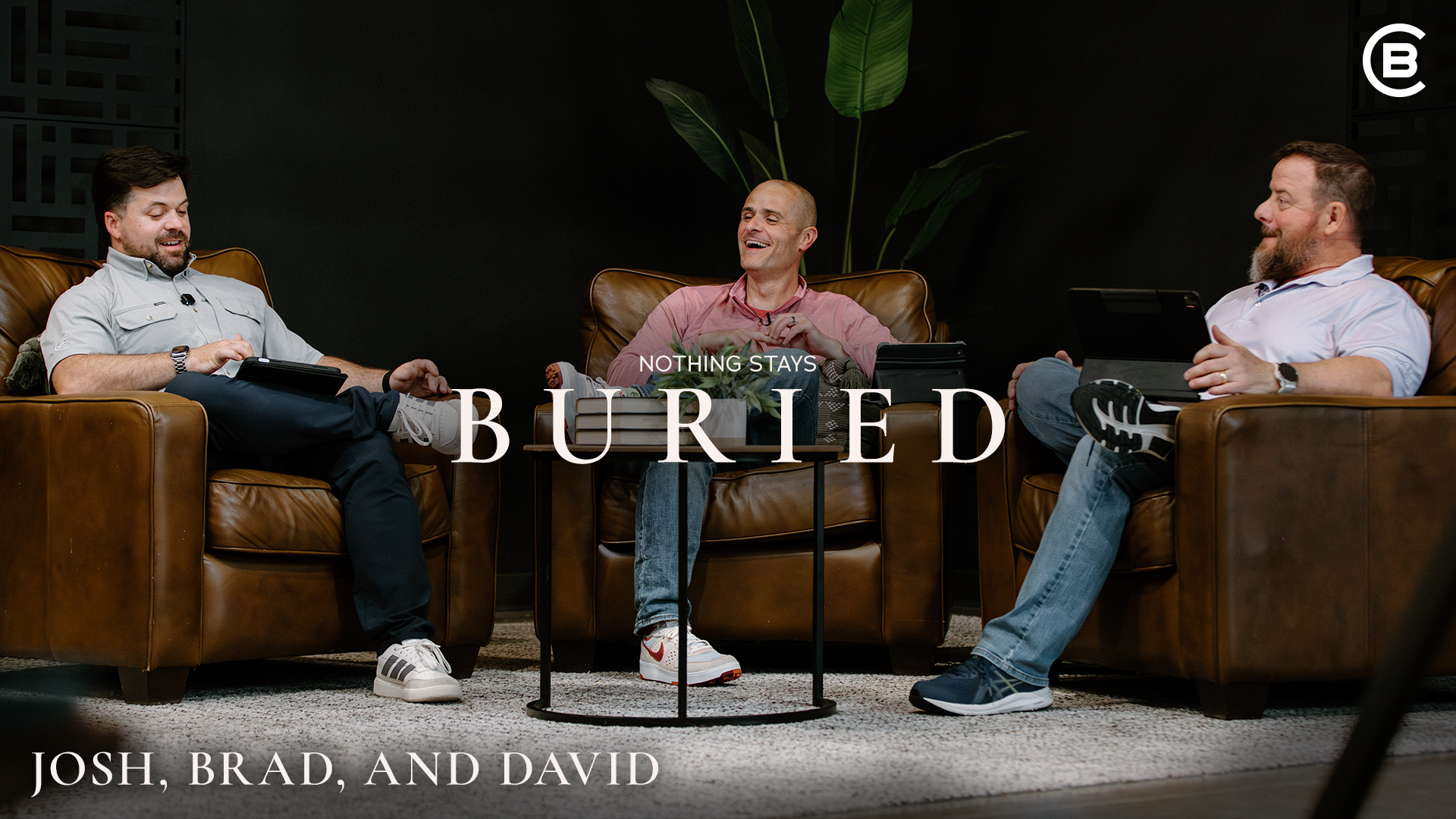
Coming off the miraculous fall of Jericho, Israel moved toward their next battle with confidence instead of dependence. What they did not know was that one man's hidden sin had already broken their covenant with God, and the consequences were about to surface in a devastating way. In this candid roundtable conversation from the Joshua: Mission series, Brad Kirby, Josh Fortney, and David Leventhal sit down with Joshua 7 and let the text guide where things go. They trace the pattern of how personal sin spreads to a whole community, how spiritual overconfidence quietly sidelines God, and what it actually looks like when God's correction is an act of love rather than abandonment. Whether you are in a season of confusion, navigating a defeat you did not see coming, or trying to understand why obedience matters this side of the cross, this conversation is worth your time.
Key Takeaways
Your sin never stays personal. When Achan took what God had set apart, the text says Israel broke faith, because we are a covenant community, not just a collection of individuals, and what one person carries in secret ripples outward to everyone closest to them.
Spiritual overconfidence is a quiet danger. After Jericho, Israel moved against Ai without consulting God at all, and the contrast with Jericho is the author's point: when God becomes an afterthought, defeat follows.
When things go wrong, look inside first. Joshua's first instinct was to blame God for the defeat, but the better question was what was happening inside the camp, and God's correction would eventually force him to ask it.
God's correction is direct because it is loving. God told Joshua to get up and deal with the sin rather than remaining in prolonged grief, because repentance is not stewing in failure but changing direction and moving forward.
The pattern of sin starts in the heart long before the moment. Achan's confession, "I saw, I coveted, I took," mirrors Genesis 3 and reveals that the issue was not the opportunity in front of him but the desires he had been carrying long before the battle.
God's justice and his mercy work together. The consequence that looked severe was actually what protected the entire nation, because unchecked sin in the camp would have continued to undermine everything God had promised them and removed his presence from the mission.
Discussion Questions
How have you seen one person's hidden struggle affect the peace of a whole home, team, or community?
Achan said "I saw, I coveted, I took." With social media, lifestyle comparison, and targeted everything, where does that cycle show up in your life?
If Achan had one trusted friend, the story ends differently. Who in your life actually has permission to ask you the hard questions?
When something goes wrong, is your first instinct to look outward for an explanation or to ask God to search you?
How do you make sense of a God who is both a kind Father and a serious Judge in the same story?
Brad drew a line from Joshua 7 to Joshua 8 and from Romans 7 to Romans 8. What does it mean for you personally that God's correction always moves toward restoration, not just consequence?
This Week's Challenge
Ask God to show you anything hidden in your own "tent" this week, and take one honest step toward bringing it into the light.
Transcript
Two Pillars: What Joshua 7 Is Doing in the Story
Chapters one through five of Joshua are all formation. God slows everything down and does work in his people before they move into the promised land. Then right as the conquest begins, the author gives the reader two foundational pillars meant to serve as templates for everything that follows. The first is Jericho: a miraculous, total victory that came through obedience. The second is Joshua 7: a devastating defeat rooted in covenant unfaithfulness. These two chapters are placed back to back intentionally. Jericho is what faithful obedience looks like. Joshua 7 is what happens when it breaks down. The reader is meant to hold both of them together as the rest of the conquest unfolds.
Sin Never Stays Personal
The first verse of Joshua 7 does something important. The author tells the reader what Joshua does not yet know: there is sin in the camp. Achan, from the tribe of Judah, took devoted things from Jericho that God had set apart. And the anger of the Lord burned against Israel, not just Achan. That is not accidental. The word used for breaking faith is the same word used in Numbers 5 for an adulterous relationship. This is covenant unfaithfulness, and it is treated as a community issue. Paul would say it this way: we are a body. When one part is struggling, the whole body is affected. A broken thumb affects the whole hand. Sin, dishonesty, addiction, withdrawal. What we carry unresolved does not stay contained to us. It always reaches the people closest to us.
Overconfidence After the Win
Coming off Jericho, Joshua sends spies to scout Ai. They come back and tell him there are not many people there. Just send a few thousand men. No need to tire the whole army. The contrast with Jericho could not be clearer. At Jericho, God initiates, designs the strategy, announces the outcome in advance, and all Israel has to do is obey. At Ai, Joshua initiates, the spies strategize based on what they observed, and God is not mentioned at all. When the spies went out in Joshua 2, they referenced God. Here, God is an afterthought. Spiritual overconfidence does not announce itself. It just quietly removes God from the conversation while everything still looks like faith.
When Hearts Melt
Israel is routed. Thirty-six men die. The text says the hearts of the people melted and became like water. If you have been paying close attention to Joshua, you have heard that phrase before. It was used to describe the kings of Canaan whose hearts melted in fear of Israel. Now it describes Israel itself. The author is making a deliberate point: when you are not living in covenant obedience, you have no covenant confidence. God's people have become what the enemy used to be. They have swapped places. Joshua, as the leader, does not yet understand why. But what he does next matters.
Joshua's Lament
Joshua tears his clothes, falls on his face before the Lord, and laments. His prayer echoes what Moses prayed in the wilderness in Exodus 14 and 16. A new generation, new pressures, the same questions. His first instinct is to run to God, and that is worth acknowledging. Even with the wrong questions, even essentially asking whether God failed, Joshua runs toward the Lord rather than away from him. The problem is that he is asking God why things went wrong on the outside when the answer is on the inside. His calculus should have been: things didn't go well, so something must be wrong in the camp. God made that connection clear across every chapter before this one.
God Speaks: Get Up
God's response is immediate. "Get up. Why have you fallen on your face? Israel has sinned." There is no extended sympathy for Joshua's grief. There is a diagnosis and a prescription. The issue is not strategy or army size or bad luck. It is covenant unfaithfulness. And God's word is clear: I will not be with you anymore unless you deal with what is in the camp. This is not about God's army. It is about God's presence. He tells Joshua to consecrate the people, which is a reset back to Joshua 3. Repentance is not prolonged mourning. It is not stewing in failure and heaping condemnation on yourself. It is changing direction. Getting up and moving.
Saw, Coveted, Took
The process of identifying the guilty party is slow and methodical. Tribe by tribe, clan by clan, family by family, man by man, the net closes in. It lands on Judah, the tribe from which Jesus would eventually come. Achan's confession is this: "I saw a beautiful cloak from Shinar, and silver and gold. I coveted them. I took them." Three verbs. Saw, coveted, took. If you are reading your Bible, you are supposed to go back to Genesis 3. The Hebrew verbs are the same. Eve saw the fruit, coveted it, took it. In the promised land, Israel has reenacted the fall. Achan probably did not walk into Jericho planning to take anything. But his heart had not been formed toward the Lord long before the battle. When the moment came, he was already primed for it.
God's Justice and Mercy Work Together
Achan, his family, and all he had are taken to the Valley of Achor and destroyed. What God had set apart for judgment at Jericho, Achan brought into his tent, and now he receives the same fate as the city he plundered. The insider has become the outsider, which is the direct opposite of Rahab, the outsider from Jericho who became an insider through faith. The severity of the consequence is difficult to read. But God's justice here is not separate from his mercy. They are working together. His justice confronts and removes the evil. His mercy restores and preserves what is good. If the sin had stayed hidden, God's presence would have continued to withdraw, and the whole future of the nation would have been undermined.
The Valley of Trouble Becomes a Door of Hope
The place is named Achor, which means trouble. A pile of stones stands as a memorial. But the story does not end there. In Hosea 2:14-15, God looks back at this very valley and says he will make it a door of hope. Even the place marked by Israel's most embarrassing failure becomes a place God redeems. Chapter 8 opens immediately with "be strong and courageous." The mission restarts. There is a direct line from Joshua 7 to Joshua 8, from Romans 7 to Romans 8. Sin exposed. Sin dealt with. And then God says get up, the mission continues. His mercy is fresh every morning. The valley of trouble is not the last word.