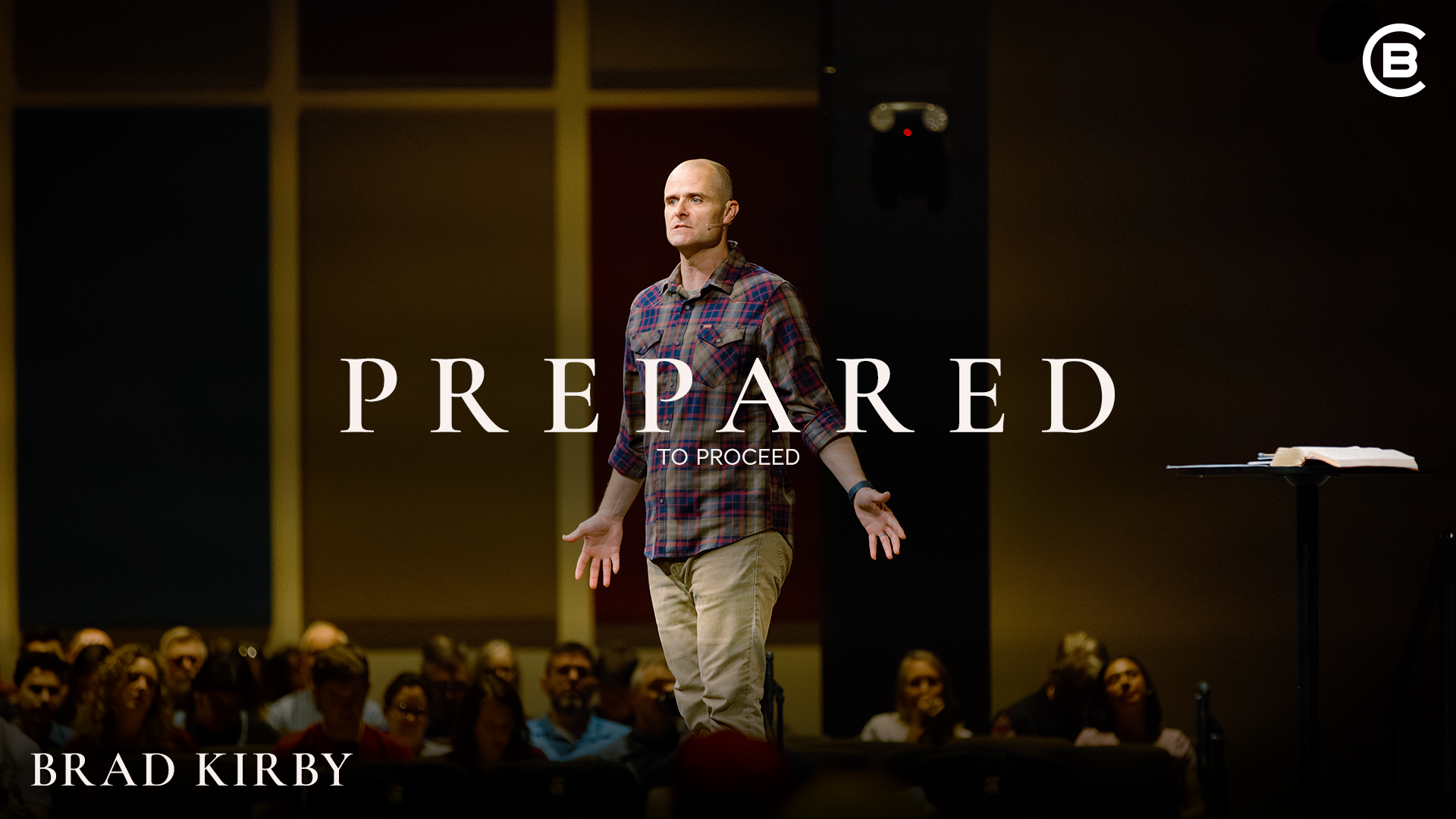
Prepared to Proceed
Sermon Notes
In Joshua 1:10–18, we see Joshua’s first recorded act of leadership after the death of Moses. God had commanded him to arise and cross the Jordan. Joshua responds immediately, organizing the nation and preparing them for movement. Israel stood between promise and possession. We stand between commission and completion. Christ has spoken. The Spirit has been given. The mission is clear. The question is not clarity. The question is movement.
Key Takeaways
Immediate obedience follows clear revelation
Preparation reveals trust in God’s promises
Blessing does not cancel responsibility
Unity protects momentum
Courage grows in community
Discussion Questions
Where might God be calling you to move without delay?
Has comfort ever made obedience feel optional?
What preferences could distract from shared mission?
Who strengthens your courage in faith?
What would it look like to “prepare provisions” spiritually this week?
Transcript
Standing Between Promise and Possession
Imagine standing where Joshua stood. Moses is dead. The Jordan is flooding. The cities ahead are fortified. And God says, “Go.” Joshua is not inheriting a calm situation. He’s stepping into the shadow of Israel’s greatest prophet with the largest assignment in their history. Take the people across the Jordan. Conquer the land. Divide the inheritance. Lead them into what God promised centuries earlier.
God had already spoken in verses 1–9. He anchored Joshua’s courage in His promise, His Word, and His presence. Now in verses 10–18, we see what obedience looks like. Courage that is grounded must become courage that moves.
Immediate Obedience
Verse 10 begins with action. God says, “Arise.” And Joshua commands the officers. There’s no recorded pause. No hesitation.
Joshua had seen what delayed obedience cost in Numbers 13 and 14. He watched a generation stall at the edge of promise and wander for forty years. He buried friends who hesitated when God had spoken clearly.
Reflection before clarity is wisdom. Delay after clarity is unbelief. So Joshua prepares the people before the river parts. The circumstances haven’t changed. The promise has. Preparation begins not because the path is visible, but because the Word is certain.
Faith packs its bags before the bridge appears. Noah built before rain. Abraham left before possession. The servants filled jars before seeing wine. Obedience rearranges life before outcomes change.
Unwavering Integrity
The Reubenites, Gadites, and half-tribe of Manasseh had already received land east of the Jordan. They were settled. Comfortable. Established. But they had made a promise to fight alongside their brothers until every tribe received its inheritance.
Joshua says, “Remember the word.” Blessing does not cancel responsibility. Comfort does not erase calling. We too have received grace. We have been invited inside the King’s house. But the Spirit was not given so we could redecorate the dining room. It was given so we could return to the gate as witnesses. Maturity keeps its word, even when obedience is inconvenient.
Resolute Unity
The people respond to Joshua with clarity: same mission, new leader, same God. There is no rivalry. No comparison with Moses. They understand something stabilizing — God changes leaders, but He does not change His purposes.
Unity is not agreement on preferences. It is agreement on mission. Churches can divide over music style, lighting, carpet color, sermon length, coffee in the lobby. But none of those things are the Great Commission. Unity protects momentum. Presence matters more than personality.
Shared Community
God tells Joshua, “Be strong and courageous.” Then the people echo it back to him. Courage flows both ways. Leadership strengthens the people. The people strengthen the leader. Like Aaron and Hur holding up Moses’ arms, encouragement becomes spiritual warfare. Fear festers in silence. Faith grows when someone says, “Stay strong. God is with us.”
Courage is sustained in community. Authority is honored because God is holy. And when a people speak courage to one another under God’s Word, they become steady — not because they are strong, but because God is among them.
Prepared to Proceed
Joshua 1 is not just about crossing a river. It is about deciding to move.
Immediate obedience.
Unwavering integrity.
Resolute unity.
Shared community.
We are not standing at the Jordan, but we are standing at a moment of calling. Christ has spoken. The Spirit has been sent. The mission is clear. The river is in front of us. The promise is behind us. The presence of God is with us.
So let’s move.
God gathers an entire nation at Shechem and starts retelling their history, and every verb points back to Him. Israel could have told the same story about their own battles, their own leaders, and their own victories, and left out the One who made it all possible. In Joshua 24, Brad Kirby shows how God traces His grace all the way back to an idol-worshiping family beyond the river. You'll walk away seeing that even in your story, you were never the main character, and that's the best news of all.
At 110 years old, with every battle behind him, Joshua gathers his people one last time. His concern isn't the enemies outside the camp. It's whether they'll still love God once life gets comfortable. In Joshua 23, Brad Kirby walks through three charges that keep a life anchored for the long haul: remember, remain, and resist.
Israel has finally won every battle and settled into the rest God promised. Then they hear that their own brothers have built a strange altar by the Jordan, and the whole nation gathers for war. In Joshua 22, Brad Kirby shows how quickly a family can turn on itself when we assume the worst before we understand the truth. Watch how a moment that looked like rebellion became a witness to what really held them together.
We tend to become like whatever we spend our time looking at. In Joshua 21, a chapter that reads like a list of forgotten towns, God quietly scatters His people across every region of the land. Josh Fortney unpacks why that matters and shows how God wanted to be so near His people that they couldn't help but look at Him. It's a picture of a God who doesn't just rescue us once but chooses to live close, right where we live.
After the battles are over and the land is divided, Joshua pauses to do something strange: he sets apart six cities of refuge. They were quiet places where someone whose life had fallen apart could run and find safety. In Joshua 20, Brad Kirby shows how those scattered cities point to the one Savior we run to when sin, shame, and suffering crush us. The greatest legacy we leave isn't a building or a name, it's a generation that knows exactly where to run.
A promise made in Genesis 12 finally comes true in Joshua 15-19, 600 years and a lifetime of waiting later. But the moment Israel receives the land, a new question emerges: will they actually inhabit what they have been given? Brad Kirby, Josh Fortney, and David Leventhal walk through five chapters most people skip and find a bold daughter, a recurring warning about small compromises, and a direct question from Joshua himself: how long will you put off taking possession of what God has already given you?
At eighty-five years old, Caleb walked up to Joshua and asked for the one piece of land nobody else wanted: the hill country still full of giants. Forty-five years earlier God had promised it to him, and Caleb never once stopped believing it would be his. In this Father's Day message from Joshua 14, Josh Fortney unpacks what it looks like to follow God with your whole heart across decades of waiting. The people who finish strong, it turns out, are usually the ones who simply kept showing up.
By the end of Joshua 12, the scoreboard reads 31 defeated kings. Then chapter 13 opens with no battles left to fight, just an old leader, an unfinished map, and a surprising command from God: start giving the land away now. In Joshua 13:1–14:5, David Leventhal shows why the inheritance was always meant to be received and not earned, and why the people carrying God's promise still had to be reminded not to treasure the gift more than the Giver. The land was good, but the One who gave it was better.
The northern kings gathered against Israel with an army "like the sand that is on the seashore," with horses, chariots, and every military advantage Israel didn't have. Joshua 11 doesn't start with a battle plan. It starts with God speaking. In this message, Brad Kirby shows what it looks like to trust God's Word when the opposition is massive, the process is long, and old fears come rising back up. If God's "I will" is greater than our "we cannot," then the thirty-one victories at the end of Joshua 12 are more than history, they're a fuel source.
Five enemy kings are sealed inside a cave, and Joshua tells his army to keep moving. Joshua 10:16–43 shows what it looks like to live from a victory Christ has already won: not paralyzed by fear, not passive in comfort, not stopping short of full obedience. The question this passage presses on all of us is the same one it pressed on Israel: will you actually live like the victory is real?
Five armies are on the move. A diplomatic mistake has become a military crisis. And Israel is about to walk into the biggest fight of the entire conquest, on behalf of people who deceived them. In Joshua 10:1-15, David Leventhal shows us that the central claim of the whole book of Joshua is on full display here: God is the primary actor who fights for His people. He doesn't wait for our circumstances to be tidy before He shows up. He works in the middle of chaotic, compromised, trainwreck situations, which, honestly, describes most of our everyday experience.
The Gibeonites showed up with moldy bread, worn-out sandals, and a convincing story about traveling from far away. Israel's leaders asked the right questions, inspected all the evidence, and still signed a covenant God never authorized. In Joshua 9, Brad Kirby shows how spiritual carelessness rarely looks like rebellion. It looks like a reasonable decision made without prayer, and even in the wreckage of that mistake, God's mercy turns out to be bigger than the worst thing it produced.
In the middle of a military campaign, Joshua stops everything and leads the entire nation 20 miles out of the way to a valley between two mountains. They still have a conquest to finish, but something more important is waiting. In Joshua 8:30–35, Brad Kirby shows why this unexpected pause is not a detour from the story of Joshua but the point of it. What Israel discovered between Mount Ebal and Mount Gerizim is what every follower of Jesus still needs: victory is sustained not by strength or strategy, but by continual dependence upon God.
Israel walked away from their first battle at Ai in shame, thirty-six men dead and the city still standing. God's response isn't a lecture. It's a battle plan, a fresh assignment, and the same promise He made before any of it went wrong. In Joshua 8, Josh Fortney traces what unfolds when Joshua stops presuming on his own strength and actually follows where God leads, and why every victory God provides is designed to point us somewhere far greater than the battle itself.
One man takes what God set apart, buries it in his tent, and says nothing. Before Joshua even knows what has happened, thirty-six men are dead and an entire nation is asking what went wrong. Brad Kirby, Josh Fortney, and David Leventhal open Joshua 7 in a candid roundtable conversation, tracing how hidden sin breaks covenant, how overconfidence silently replaces dependence on God, and why his correction is always an act of love. The valley of trouble is not the last word.
Israel stands outside the walls of Jericho, and God's battle plan is to walk in circles in silence. For six days, nothing changes: no cracks, no progress, no sign the walls are going anywhere. In Joshua 6, Brad Kirby traces the pattern underneath it all: God speaks His promises before anything visibly moves, His people walk in faithful obedience, and God wins a victory that only He could win. This message is for anyone whose obedience has felt routine lately, and whose walls are still standing.
Joshua is standing alone in the no man's land outside Jericho when a stranger appears with a sword already drawn, and his question about whose side the man is on turns out to be exactly the wrong question. Most of us approach God the same way, hoping He'll confirm what we've already decided rather than actually commanding us. David Leventhal walks through Joshua 5:13–15 and shows how one encounter in three verses reframes everything: the sword was drawn before Joshua arrived, the army was already assembled, and Joshua's job was never to launch the campaign but to take his place inside one already in motion. The question God is still asking today is the same one He put to Joshua: are you trying to get God on your side, or are you willing to get on His?
After forty years of wilderness, Israel finally sets foot in the Promised Land with victory within reach. But instead of advancing into battle, God stops everything to deal with something more fundamental than strategy. In Joshua 5:1–12, Brad Kirby shows why God insists on identity before activity and what it costs when His people forget whose they are. The challenge is as current as it is ancient: you will never truly engage the world around you if you've become indistinguishable from it.
Israel has just walked through the Jordan on dry ground, and God won't let them take another step without stopping first. Twelve stones, one from each tribe, pulled from the riverbed and stacked where everyone can see them. In Joshua 4, Josh Fortney unpacks why God commands His people to remember and how those stones were meant to start conversations that would carry faith to the next generation. The memorial points backward to what God did, but it also points forward to who He's calling His people to become.
After forty years in the wilderness, Israel finally reaches the edge of the Promised Land — and a flooded river stands in the way. In Joshua 3, Brad Kirby shows how God rarely clears the path before calling His people to walk it. When the priests step into the rushing water, the river stops — but not a moment before their feet are already wet.