The Inheritance

Sermon Notes
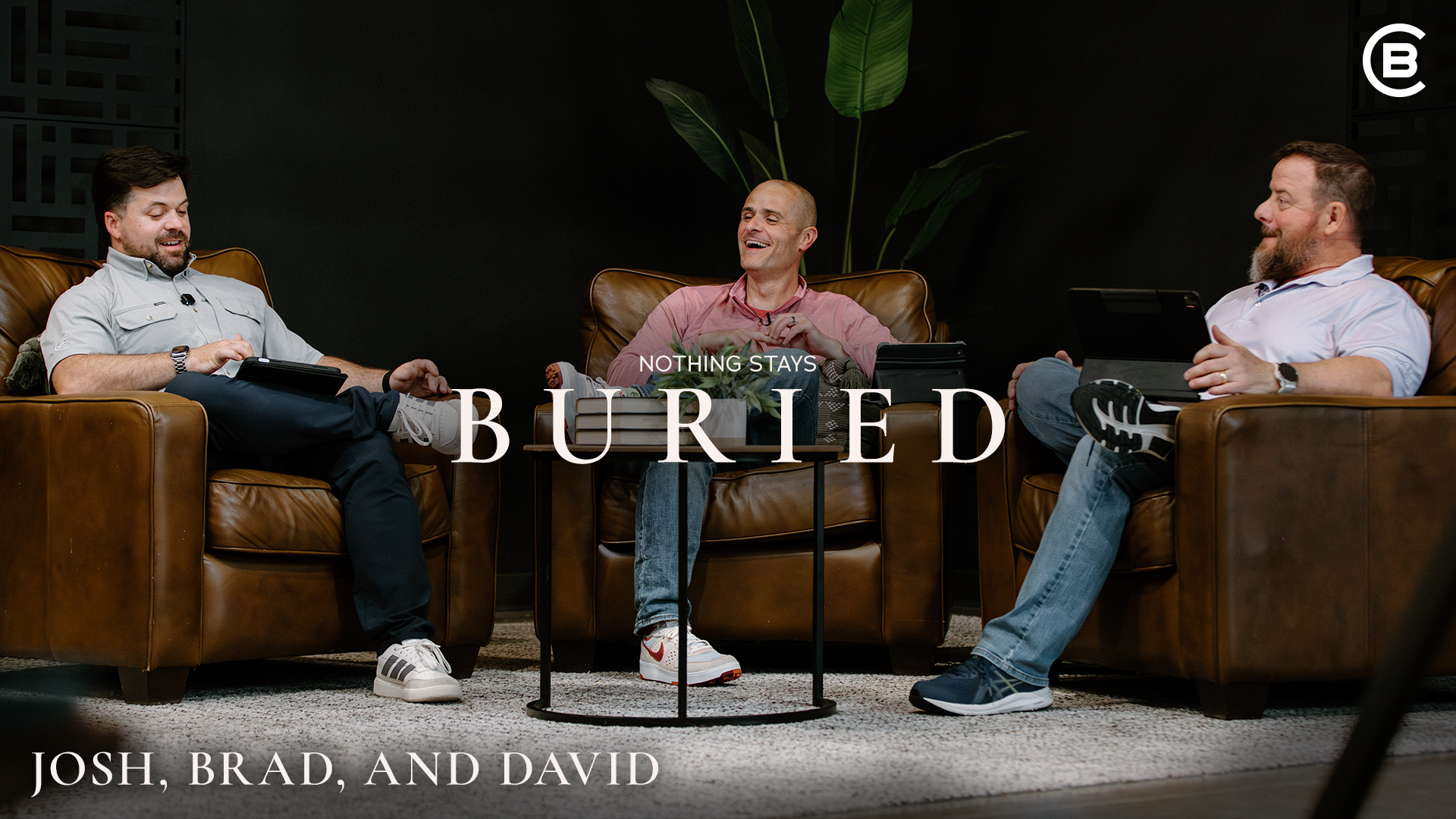
Joshua 15–19 may be one of the most skipped passages in the whole Bible, but it is also one of the most significant. These five chapters record something God promised to Abraham roughly six hundred years before it happened. It is now finally coming true, tribe by tribe, boundary by boundary, name by name. Brad Kirby, Josh Fortney, and David Leventhal walk through what makes this moment the crown jewel of the entire book of Joshua, and why the details that seem tedious are actually the point. Along the way, they surface two questions that are hard to avoid: Are you bold enough to ask God for what you actually need? And are there things in your life you are tolerating instead of confronting? If you have ever wondered whether God cares about the small stuff, or whether He is really as generous as Scripture says, this conversation is for you.
Key Takeaways
God's promises have a long memory. The land distributed in Joshua 15–19 was first promised to Abraham in Genesis 12, more than six hundred years before Israel set foot on it. Through slavery, wilderness, and failure, God never forgot. These chapters are not a boring list of real estate details — they are proof that God keeps His word across generations.
Receiving an inheritance and inhabiting it are two different things. The land had been given, but the people still had to go possess it. Joshua 18:3 captures the tension directly: "How long will you put off going in to take possession of the land that the Lord your God has given you?" God's promises are real, but there is a difference between knowing you have something and actually living in it.
Bold asking is part of faithful living. Aksah, daughter of Caleb, dismounted her donkey and asked her father for springs of water because dry land alone was not enough to thrive. She knew her father's character well enough to ask specifically and boldly. The teachers draw a direct line from her request to the way followers of Jesus are invited to come before God — not timid, not passive, but specific and expectant.
Partial obedience has real consequences. Three times across these chapters, the same phrase appears: they did not drive them out. Each time, there was a reason — comfort, convenience, the benefit of forced labor. But what seemed like a small compromise became the seed of the failure recorded in the book of Judges. Tolerating what God calls us to confront rarely stays contained.
You are not trying to earn the inheritance — you are learning to live in it. The teachers land on this: the Christian life is not about white-knuckling behavior change or striving to prove something. The victory has already been won. The call is to walk it out, spirit-empowered, dependent on God rather than on personal effort.
Discussion Questions
The teachers describe Joshua 15–19 as the crown jewel of the whole book because it is where a six-hundred-year-old promise finally comes true. What does it do to your faith to think about God keeping a promise across that kind of timeline?
Aksah asked her father specifically for springs of water because she knew dry land alone was not enough to thrive. Is there something you have been settling for in your spiritual life that you have not brought before God with that kind of honesty?
The teachers note that Joshua asks the people, "How long will you put off going in to take possession of the land?" What is one area of your life where you know what God has called you to but you have been putting it off?
The phrase "they did not drive them out" appears three times in these chapters, each time with a different reason: comfort, convenience, and personal benefit. Which of those three reasons is most tempting for you when it comes to tolerating sin instead of confronting it?
David shared that we sometimes avoid going to God because we have a wrong picture of who He is — imagining a reluctant father rather than a generous one. How does your picture of God shape whether or not you bring your real needs to Him?
The teachers distinguish between receiving an inheritance and inhabiting it — between knowing what you have been given in Christ and actually living in it. What would it look like for you to move from one to the other in a specific area this week?
This Week’s Challenge
Read Joshua 15–19 on your own this week, and when you finish, write down one thing you are going to stop tolerating and one thing you are going to start asking God for specifically.
Transcript
What We Are Actually Looking At
Joshua 15 through 19 is the part of the Bible most people skip. City by city, town by town, boundary by boundary, family by family. It reads like you wandered into the ancient Israel County Records office. And honestly, that is exactly why we are covering it.
The honest truth is we almost skipped it too. But way back when we started planning this series, David said something that changed the framing entirely. This is the pivot point. This is the consequential moment where what has been far off for centuries actually happens.
The Crown Jewel of the Whole Book
Here is the thing about these five chapters. What looks tedious on the surface is actually the fulfillment of a promise God made in Genesis 12, more than six hundred years before Israel ever set foot on this land. Through 400 years of slavery in Egypt, through a failed first attempt at entering Canaan, through forty years in the wilderness, God never forgot.
So in some non-intuitive way, this allotment of land is the crown jewel of the whole book. It is God finally letting Israel get their hands and their feet on the dirt He promised to Abraham. That is worth slowing down for.
How the Land Was Distributed
Before diving into each chapter, it helps to understand the process. The land was not distributed by military achievement or personal influence. It was distributed by lot, something like casting dice, stones or wood thrown to the ground. Leadership used the result to determine who got what.
To most of us that sounds random. But the Hebrew scriptures are clear that the sovereignty of God is in the lot. What appears random is actually the Lord directing His people. The land was not earned. It was given, by God, to the people He chose, through a process that kept any one person from taking the credit.
Chapter 15: Judah and a Bold Daughter
Judah receives the largest portion of land, including the territory around Hebron that Caleb had asked for boldly at the end of chapter 14. But the moment that stands out in chapter 15 is not about Caleb. It is about his daughter Aksah.
Aksah is given dry land in the Negev as part of her inheritance. The Negev is harsh and arid. And rather than accept it quietly, she dismounts her donkey, goes to her father, and asks for something specific: springs of water. She says, you gave me the south land, give me also springs of water. And Caleb gives her the upper springs and the lower springs.
What Aksah Teaches Us About Prayer
We spend significant time here because the picture is so clear. Aksah did not just roll with what she was handed. She knew her father's character well enough to ask. She was specific. She was bold. And she was not wrong to ask.
The pastoral question this raises is direct: are there places in your spiritual life where you are living in dry land, not because God wants you to stay there, but because you are afraid to ask? Brad puts it plainly. Sometimes we settle for dryness and call it contentment or humility, when really it is fear. We do not bring our real needs before God because we have a wrong picture of who He is.
The God Who Is Not Reluctant
Scripture does not show us a reluctant father. Matthew 7 says ask and it will be given to you. Matthew 6 says He already knows what you need before you ask. James 1 says God gives wisdom generously to those who ask without doubting, jumping at the chance to give it. The picture is not a God you have to convince. It is a God who is waiting for you to bring your need honestly and specifically.
Josh shares a personal story of praying the same prayer asking for provision for eight years, paying off over a significant student loan debt on a small salary. The debt went down. Not all at once. But God was at work the entire time. The point is not that God always answers the way we expect. The point is that He is not offended when you keep coming back.
Chapters 16 and 17: A Recurring Warning
Ephraim receives land in chapter 16 and Manasseh in chapter 17. Both chapters carry a theme that the teachers describe as a sober minor chord running through the entire passage. They did not drive them out.
In chapter 16, the Canaanites who remained in Ephraim's territory were put to forced labor instead of being removed as God had instructed. In chapter 17, the same pattern appears again. There was a reason each time: plenty of land made removal feel unnecessary, and the labor benefit made it feel advantageous. Partial obedience was convenient.
What Partial Obedience Actually Costs
The teachers are honest about where this leads. Turn one page past the end of Joshua and you are in Judges chapter 1. The people who were supposed to be removed did not stay in the background. They intermingled. Marriage followed. Then their gods followed. The cycle of failure in Judges grows directly from the seeds of compromise planted here.
The analogy that lands is a python someone keeps as a pet. It lives in the background, seems manageable, and then one day it does what pythons do. Tolerating what God calls you to confront rarely stays contained. A little bit of cyanide is still cyanide, no matter how small the amount.
Chapter 18: The Theological Center
The theological center of all five chapters is in chapter 18, verses 1 through 10. The whole congregation assembles at Shiloh. The tabernacle is set up. God is dwelling among His people in the heart of the land. It is one of those moments where the camera pulls back and you see the full picture of what has been happening.
Joshua then asks the remaining seven tribes a pointed question in verse 3: how long will you put off going in to take possession of the land that the Lord your God has given you? They had received the promise. They had not yet inhabited it. Those are two different things.
Receiving vs. Inhabiting
This distinction is one of the most important in the passage. Receiving an inheritance means it is yours. Inhabiting it means you are actually living in it, working it, tending it, fighting for it. The Israelites had the land. They had not yet fully possessed it.
The New Testament equivalent is not hard to see. Followers of Jesus have been given an inheritance in Christ. Grace, salvation, adoption, the hope of glory. And yet there is a way to carry all of that and still walk around with a dry, untended faith, serving and obeying without dependance, going through the motions without actually living in what has been given.
Chapters 18 and 19: The Rest of the Tribes
Benjamin receives his allotment next, followed by Simeon, whose territory is carved out of Judah's land because Judah's portion was larger than needed. The teachers note that this traces back to Genesis 49, where Jacob on his deathbed pronounced that Simeon would be scattered among the other tribes, a consequence tied to the massacre at Shechem. Even through the casting of lots, God's memory is long.
Zebulon, Issachar, Asher, Naphtali, and Dan follow. And last, in verse 51 of chapter 19, Joshua himself receives his inheritance. The man who led the entire campaign receives his portion last. And then six words close out five hundred years of promise: they finished dividing the land.
Living It Out
We close with a tension that runs through the whole passage. There is a spiritual retirement syndrome that tempts believers to coast after they have put in their time. And there is a striving syndrome that turns the Christian life into a checklist and ends in exhaustion. Neither is the picture Scripture gives.
The picture is Aksah. Bold, asking from a place of knowing who her father is. The picture is Caleb at 85, still charging the hill, still ready to fight, not because he is trying to earn something but because he trusts the God who promised. Victory in Christ is secured. The inheritance is real. The call is to actually live in it, by the Spirit, dependent on God rather than on personal effort.
Looking Further Ahead
The land Israel received, as real and significant as it was, is itself a picture of something greater. The wilderness of this life, the long walk through trials and difficulty, is heading somewhere. Revelation 21 describes a day when God will dwell with His people, wipe every tear, and give water from the spring of life without cost.
What Israel received in Joshua 15 through 19 is a signpost. The full inheritance is still coming. And the God who kept His promise to Abraham across six hundred years is the same God keeping His promise now.