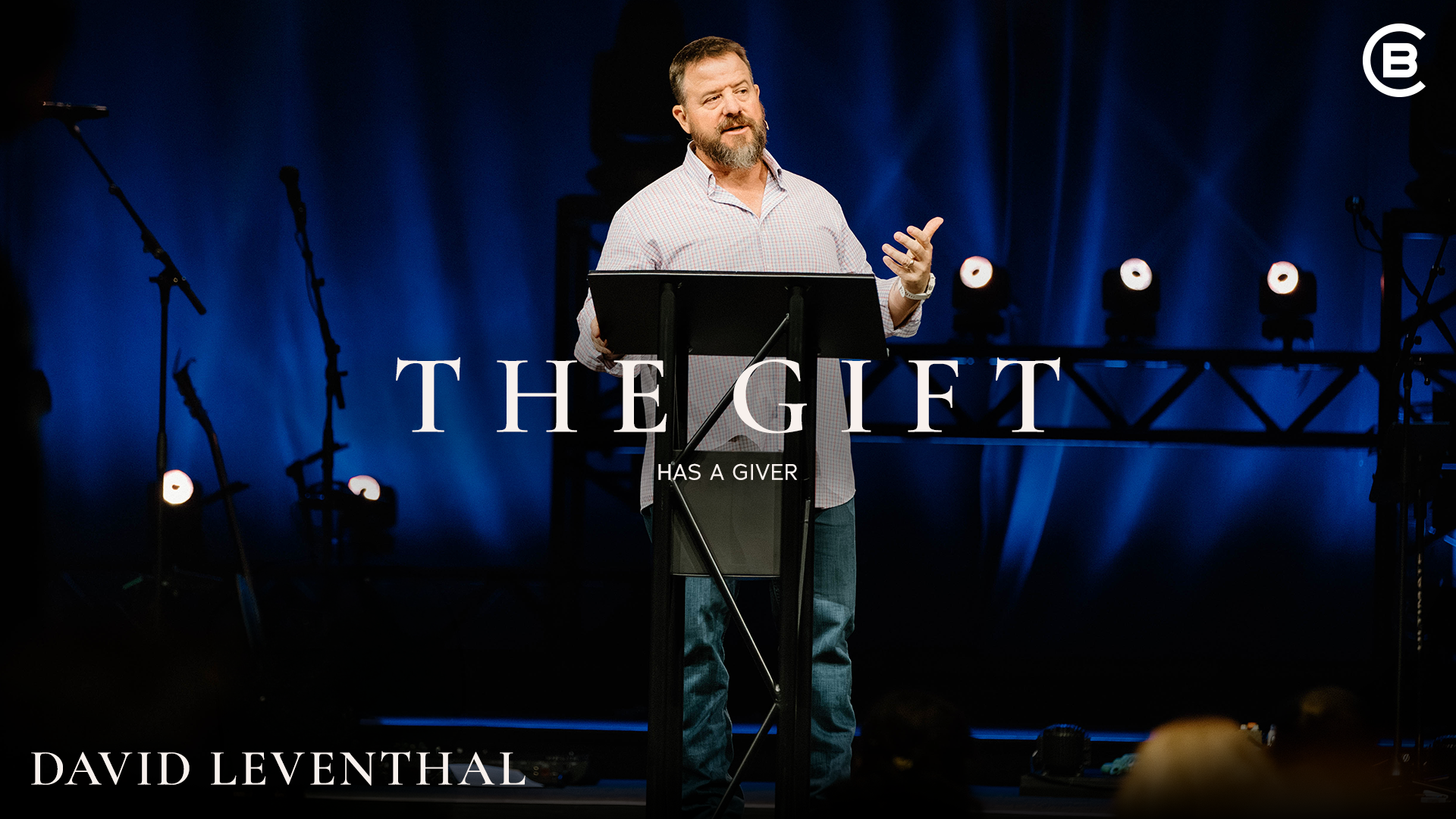
The Gift Has a Giver
Sermon Notes
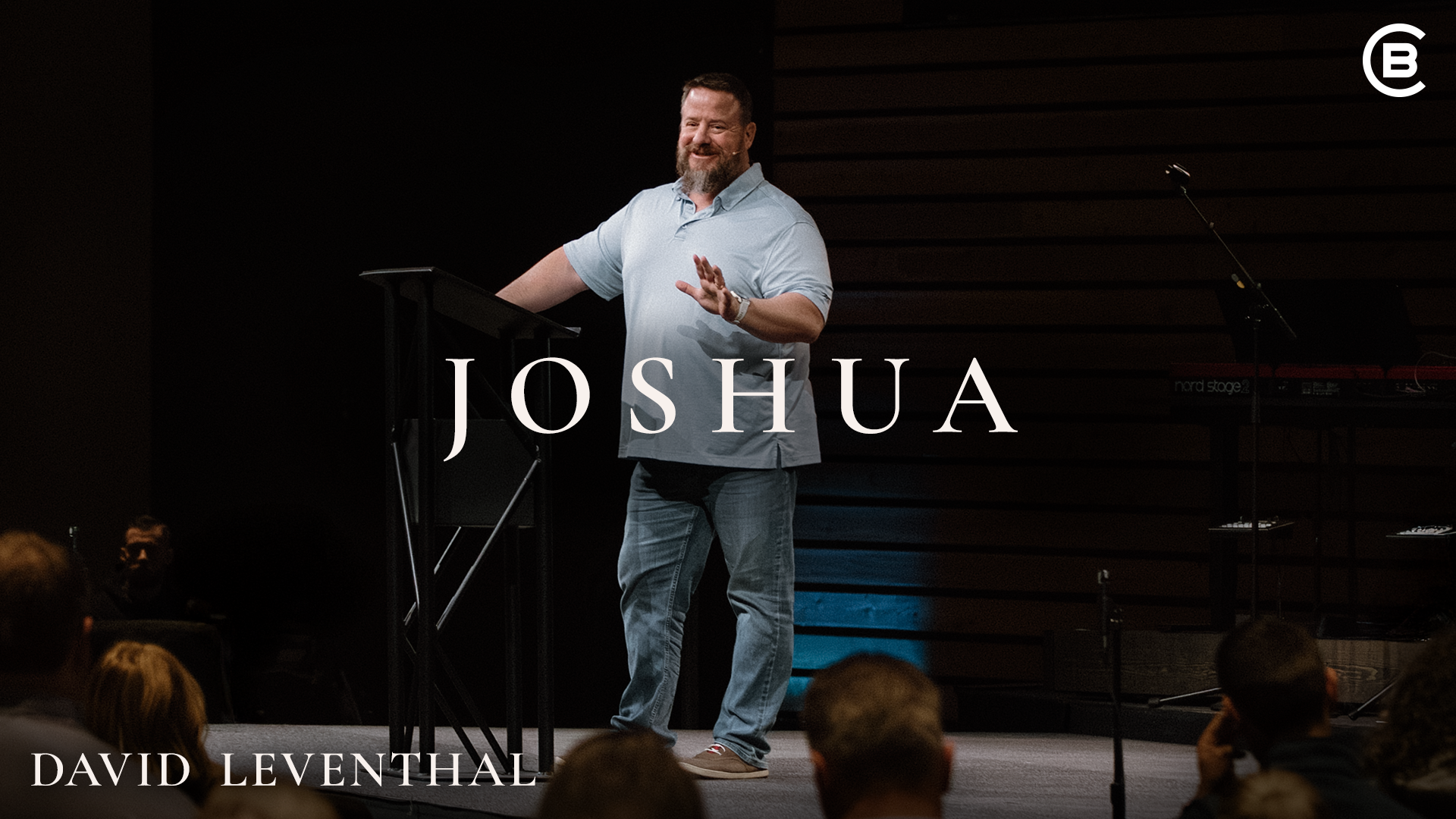
By the time you reach Joshua 13, the battles are over and the book slows down to long lists of boundaries and town names that can feel tedious. But underneath those lists is one of the most hopeful ideas in the Bible: Israel didn't earn the land they were given. It was handed to them as a gift, divided up before the work was even finished, as proof that the God who made a promise centuries earlier still keeps His word. David Leventhal unpacks Joshua 13:1–14:5 and shows why the gift was always meant to point past itself to the One who gave it. Come see what it looks like to receive your life as a gift instead of a trophy.
Key Takeaways
You received it. You didn't earn it. The land was handed out by lot, not by which tribe fought hardest, the same way Ephesians says salvation comes by grace and not by works.
What you leave undone gets handed down. One unfinished battle in Joshua 13 became three generations of fallout through Absalom, and the patterns we tolerate rarely stay contained to us.
Faithfulness is just as contagious as failure. Caleb's boldness showed up in his daughter and his nephew, which means as long as you're still breathing, you still have chapters to write.
Obedience is worship, not just rule-following. When you keep praying for your marriage or standing on the porch waiting for a child to come home, Romans 12 calls that ordinary faithfulness a living sacrifice.
The gift is good, but the Giver is better. God scattered the Levites across the whole map so every family would have a living reminder that He is worth more than anything He gives.
Discussion Questions
When you look back at your life, where are you most tempted to say "look what I built" instead of "look what God gave me"?
What's one part of your story with God you haven't retold in a while, and what did He have to overcome to get your attention?
Is there something you've been telling yourself for years that you'll deal with eventually, that someone close to you may end up inheriting?
Where in your life does obedience currently feel more like exhausting duty than worship?
Which good gift in your life has the strongest pull toward quietly becoming the thing you treasure most?
How does seeing your inheritance as received rather than achieved change the way you treat the people God has placed around you?
This Week's Challenge
Name one thing you have been telling yourself for years that you'll deal with, and take one concrete step toward addressing it this week.
Transcript
Where We Are in the Book
For the last four months we've worked through the first half of Joshua. We watched Joshua get charged to lead, the Jordan split, and the nation come into covenant alignment. We saw Jericho fall, the gut punch of Achan, the deception of the Gibeonites, and the day the sun stood still. By the end of chapter 12, there's a scoreboard of 31 defeated kings.
Then chapter 13 opens and the whole tone shifts. No more battles. No more miracles to narrate. Just an old man and an incomplete map. We've called this final section Legacy, and it runs from chapter 13 through 24. A legacy isn't something you accomplish. It's something you leave behind, and that's exactly what these chapters do. They're the reading of the will, every family and every boundary named, so the promise can never be taken back.
An Old Man and an Incomplete Map
Verse 1 says Joshua was old and advanced in years, and the Lord tells him plainly that much land still remains to be possessed. The phrase used for his age is the same one used of Abraham and Sarah right before Isaac was born. Luke later reaches back for that same phrase to describe Zechariah, Elizabeth, and Anna. When it shows up, God is about to do something with a life that looked, by every human measure, past its prime.
Notice there's no panic in the text. God doesn't call Joshua a failure, and He doesn't treat the unconquered land as an indictment of his leadership. He simply states reality and moves straight to what's still on the map. Two things are true at the same time: Joshua is old, and the promise isn't finished. Both can be true without anyone reaching for the panic button.
The Promise Comes Before the Possession
Look at what God says in the back half of verse 6: "I myself will drive them out from before the people of Israel." The remaining work belongs to God. Joshua's job was never to secure the whole map through massive campaigns. It was to go and distribute what God had already given.
That's the surprising part. God's answer to an incomplete map isn't "go finish the work." It's "go give it away." Deeds get issued for land that hasn't been fully cleared, because the promise is real enough and reliable enough to be divided and handed down before every enemy is gone.
We're not so different in 2026. Paul tells us the Spirit is a deposit, a guarantee of an inheritance not yet fully delivered. We hold the deed while enemies still lurk on the property. So we're called to live in the realness of God's promise.
What Moses Already Did
Before Joshua distributes a single acre west of the Jordan, the text pumps the brakes and looks east. Verses 8 through 13 recap what Moses already did for Reuben, Gad, and the eastern half of Manasseh. Those tribes asked for the good grazing land east of the river, and Moses agreed on one condition: their fighting men would cross over and help take the west. They did.
So why stop and recount it? Two reasons. First, it establishes Moses as the pattern. Joshua isn't improvising here. The faithfulness of one generation creates the template for the next. Second, it shows that Israel on both sides of the Jordan is one people receiving one inheritance. Same promise, same God, same covenant. What God gave east and what He's about to give west are two halves of one gift.
What We Leave Undone
Verse 13 lands like a gut punch: Israel did not drive out the Geshurites or the Maacathites, and they remain in the land to this day. There's no finger-pointing, just cold fact. And this same notice keeps showing up as you read ahead.
Watch how it plays out. Generations later, David marries a Geshurite princess. Her son is Absalom, who murders his half-brother, flees to Geshur, comes back to stage a coup, and publicly humiliates his own father. One unfinished battle in Joshua 13, and you get that mess three generations later.
What was true for Israel is true for us. What we leave undone doesn't stay undone. It finds its way into the story of the people who come after us. That's true in families. It's true in churches.
The Tribe That Gets God
As the lists divide the east tribe by tribe, the text pauses on verse 14: to the tribe of Levi, Moses gave no inheritance. Every other tribe gets boundaries, towns, and fields. The Levites get none of that. This isn't punishment. Five times across these chapters the writer says it, because he doesn't want us to miss it.
Here's the backstory. Levi started under a curse from Jacob, scattered through Israel. But at Sinai, when the nation worshiped the golden calf, the Levites were the only tribe to step forward for the Lord. God took their curse and turned it into a calling.
Verse 14 says the fire offerings are their inheritance. Verse 33 goes deeper: the Lord Himself is their inheritance. Not a system, not a role. God Himself. The Levites aren't set aside. They're distributed as a living reminder embedded in every community.
The Gift Has a Giver
Chapter 14 turns to the west, and before a single boundary gets drawn, the text introduces the process. Verse 1 names Eleazar the priest first, ahead of Joshua. The military commander steps back and the high priest steps forward, because this isn't a military exercise. The land belongs to God, and the priest represents the owner.
Verse 2 tells us the inheritance came by lot. Casting lots wasn't gambling, and it wasn't leaving things to chance. It was Israel's way of saying no one's preference or ambition decides this. God decides. Proverbs 16:33 says the lot's every decision is from the Lord.
So no tribe earns its portion. No tribe negotiates a better deal. The gift is genuinely a gift, unearned and unmanipulated, decided by God from start to finish. They received it in the way the Giver told them to receive it.
The Inheritance Is Received, Not Achieved
This might be the single most important thing to carry out of Joshua 13 and 14. The land wasn't distributed by military ranking or by which tribe fought hardest. It was distributed by lot, a small stone whose outcome Proverbs says is decided entirely by God. Every family's portion was an unearned, sovereignly given gift.
We're not so different. We agree theologically that salvation is grace and not works, that no one can boast. But our hearts drift so easily toward scorekeeping, counting up what we've built and contributed. When we do that, we treat the inheritance like a medal we earned instead of a deed we were given. If you're in Christ this morning, you didn't earn His love. You received a free gift. The story isn't about what you've done. It's about what you've been given.
What You Leave Undone Gets Handed Down
Remember Joshua 13:13. One people group left in the land, and three generations later you get David, Absalom, a coup, and public humiliation. One unfinished battle, decades of consequences.
I know this principle is uncomfortable, but it's textually unavoidable. Our incomplete obedience doesn't quietly disappear. And it usually isn't the catastrophic failures that shape what our children inherit. It's the little things we tolerate over a long time. The conversation you keep avoiding. The habit you keep excusing. The hurt you never let anyone help you heal.
Those things don't stay contained to you. Your spouse is watching. Your kids are taking notes. So here's a question worth sitting with: what in my life have I currently left undone that someone else is going to have to deal with?
Your Obedience Is an Act of Worship
Remember the distribution process. The priest goes first. The lot is cast before God. The whole thing is set up to remind us this was a sacred act, not just a trip to the county appraisal district. Verse 5 closes by noting that Israel did exactly what the Lord commanded.
Obedience in the context of a covenant relationship is worship. It's trust that God's instructions are good, that there's wisdom in where He has drawn the boundaries. Paul says it this way in Romans 12: present your bodies as a living sacrifice, which is your spiritual worship. When you pursue reconciliation you'd rather avoid, when you keep praying for your marriage, when you keep standing on the porch waiting for a child to come home, that is worship.
Don't Mistake the Gift for the Giver
Four times across these two chapters, the writer reminds us the Levites got no land, because the Lord Himself was their inheritance. Not acreage. God Himself. Later He scatters the Levites across the whole map so every family could make a short trek to the tribe whose inheritance was God.
Here's the thing about gifts, especially the really good ones: they have a gravitational pull. The better the gift, the stronger the temptation to make the gift the point. Your spouse, your kids, your health, your success, your ministry. Each one is a genuine gift, and each one can quietly become a substitute for God. By placing the Levites all through the land, God built in a constant reminder that the Giver is to be treasured more than the gift. So enjoy the gifts. Be grateful for them. Just guard your heart from loving them more than the One who gave them.