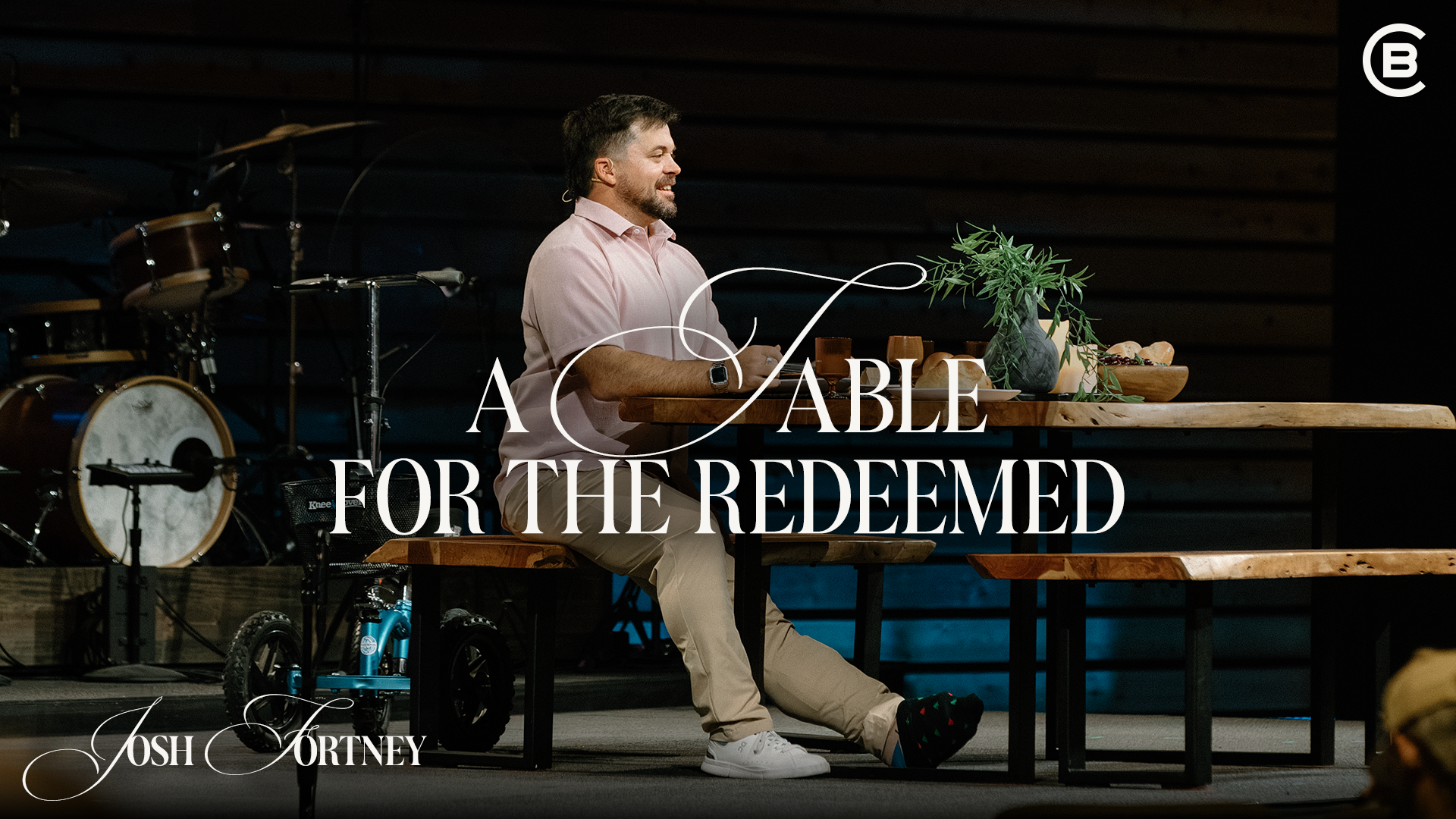
A Table for the Redeemed
Sermon Notes
On the night before the cross, Jesus reclined at the Passover table with His apostles, sharing a meal God's people had kept for generations to remember how He rescued them from Egypt. Then He took the bread and the cup and changed the meaning of the meal forever. In Luke 22:14-23, Josh Fortney walks through the table for the redeemed, from the unlikely men Jesus chose to call family to the new covenant He announced in His own body and blood. That same night also holds up a hard mirror, because the man who betrayed Jesus was sitting right there, receiving the bread. If communion has started to feel routine, or you have never been sure what it means, this one is worth your time.
Key Takeaways
Nobody earns a seat at this table. Jesus gathered fishermen, a tax collector, and guys other rabbis had passed over, and He chose them not for their smarts, strength, or skill but simply because He called them.
Jesus moved toward the cross on purpose. "I have earnestly desired to eat this Passover with you" shows a Savior who was not reluctant but eager to carry out God's plan of salvation.
Every Passover was pointing to this moment. The lamb's blood on the doorposts in Exodus foreshadowed what Jesus fulfills as the true Lamb of God, announcing a new covenant over bread and wine.
Communion preaches the gospel without words. Every time we take the bread and the cup, we celebrate the salvation we get through Jesus and from Jesus.
Being close to Jesus is not the same as surrendering to Him. Judas received the bread and heard the words, which shows that the table reveals the heart but does not automatically change it.
Discussion Questions
What rhythms or reminders actually help you remember what Jesus has done for you?
Knowing the apostles did nothing to earn their seat, what do you still feel you have to bring to earn yours?
Are you regularly at the table with God's people, or has your faith become something you mostly live out alone?
What changes for you when you picture Jesus eagerly desiring this meal rather than reluctantly enduring it?
Where are you most tempted to forget Jesus, whether by chasing money, hiding sin, or trying to make up for it with good deeds?
When you come to communion, are you honestly examining your heart or mostly going through the motions?
This Week's Challenge
Name one way you tend to forget Jesus, and put one specific reminder in place this week to remember Him on purpose.
Transcript
Meals That Change Everything
Some meals change everything. For me, it was the night I proposed at Babe's, and a couple of meals with Kyle, one at Chuy's and one at Chili's.
The Bible is full of meals like that. There's the first meal in Genesis. There's the Passover meal in Exodus. And then there's Jesus, resetting the table.
And I think that's so important, because these meals aren't purely for our stomachs. Yes, food is a provision and grace from the Lord to make sure we live. But these meals are for our head and for our heart. The Lord's Supper provides in ways beyond our specific hunger. At the table for the redeemed, we remember our Redeemer, relate to our Savior, redefine the standard, remind ourselves of salvation, reexamine our hearts, and receive the gift.
Remember Our Redeemer
We hit this in Joshua. God told His people to put up stones so they would remember what He had done. But Exodus is really where the tone for remembering gets set.
In Exodus 12, God tells His people He will pass through Egypt, and when He sees the blood on their doorposts, He will pass over them. Then He says, "This day shall be for you a memorial day, and you shall keep it as a feast to the LORD; throughout your generations, as a statute forever."
It's a clear call to remember, with specific instructions. Arguably tedious ones. Seven days of unleavened bread, and no leaven anywhere in the house. But here's what's wild. God's people knew how to remember with a party. Sabbath. Passover. The Feast of Weeks. The Feast of Tabernacles. Hanukkah. Purim.
A People Who Remember
God has a rich history of telling His people to do something specific to remind their minds and their hearts about their Redeemer, and about His provision through keeping His promises. He was rescuing His people as He fulfilled those promises. And He set a tone His people followed for generations upon generations.
So when we get to Luke 22, Jesus gathers with His disciples as part of that generation, people who remembered and celebrated Passover. He sends Peter and John ahead to prepare the meal in a large upper room. There's a lot in those first verses, and it's not our main text today, but I wanted us to read it together because it gives us context right from the text.
Because Jesus doesn't just practice what God commanded. He hosts the table for the redeemed, and it changes everything.
Who Gathers at the Table
"And when the hour came, he reclined at table, and the apostles with him." Did you catch that word? Apostles. Luke uses it rarely compared to disciples, and it's deliberate here.
A disciple is a learner, a follower. An apostle is someone sent, commissioned, called by Jesus. All apostles are disciples, but not all disciples are apostles. It's a square and rectangle thing, right? Here, Jesus has His twelve, specifically chosen.
Passover was a household meal. Families reclined together. But Jesus redefines the household. His people are the new family of God, the apostles there with Him and all who believe in Him. That's why we say this is a meal for believers. It's a family meal. But that doesn't mean we don't want people to join the family, and nobody has to earn a seat.
They Didn't Earn a Seat
Remember who these guys were. They didn't earn a seat at the table. By the standards of their day, they weren't even qualified. Fishermen. A tax collector. Guys other rabbis had passed over. And the one who had already sold Jesus out and was waiting for the right time. He still had a seat at the table.
Jesus didn't choose them for their smarts, their strength, or their skill. He chose them, and that's all that mattered. Spurgeon said, "The Lord Jesus made his chosen ones to be his table-companions." He took these rejects and made them family.
And who we gather with matters. The redeemed life is not a solo journey. Communion is communal. So are we regularly at the table with God's people, or are we consuming faith privately and alone? And are we even inviting people to our tables?
Redefine the Standard
"I have earnestly desired to eat this Passover with you before I suffer." That phrase is a Hebrew way of saying intense longing. Jesus isn't reluctant. He's eager to move forward with God's plan of salvation, even though it means the cross. Can we just sit with that for a second? The cross wasn't forced on a passive victim. The Son willingly moved toward it for love of His people.
In Exodus 12, the lamb's blood on the doorposts was a sign of protection and substitution. John the Baptist called Jesus "the Lamb of God, which taketh away the sin of the world." What the Exodus lamb foreshadowed, Jesus fulfills at this table.
And notice, "I will not eat it until..." This meal is a turning point. Jesus is already looking ahead to the marriage supper of the Lamb in Revelation 19, when He dines with us again.
Jesus Breaks the Script
First century Passover meals followed a guidebook called the Haggadah, with songs, the retelling of the Exodus, and four cups. The cup of sanctification: "I will bring you out." The cup of deliverance: "I will deliver you." The cup of redemption: "I will redeem you." The cup of praise: "I will take you for My people." They even poured a cup for Elijah, looking ahead to the final redemption and the coming Messiah. Jesus participates fully in this tradition before He transforms it.
Then He takes the bread. "This is my body, which is given for you. Do this in remembrance of me." And the cup. "This cup that is poured out for you is the new covenant in my blood."
This is where Jesus breaks the script. He doesn't talk about Exodus 12. He's foretelling the sacrifice that will take place shortly after this meal.
Remind Ourselves of Salvation
In these verses we walk through three movements. First, longing. Jesus desired this moment. The table isn't a reluctant act of duty. It's love made visible. Second, fulfillment. The kingdom gives every Old Testament shadow its meaning. Passover was always pointing to the moment when the perfect Lamb of God would be sacrificed for the sin of all people.
Third, the new covenant. Jeremiah 31:33 promised it: "I will put my law in their inward parts, and write it in their hearts; and will be their God, and they shall be my people." Jesus announces its arrival over bread and wine.
So communion is not routine. It's a proclamation. Every time the church comes to the table, it preaches the gospel without words. We're celebrating the salvation promise we get through Jesus and from Jesus.
Reexamine Our Hearts
"But behold, the hand of him who betrays me is with me on the table." Luke places the betrayal announcement after the Lord's Supper, unlike Matthew and Mark. That's intentional. The grace of the new covenant is declared first. Then the weight of human response sits right beside it.
In the ancient Near East, sharing a meal was a sacred act of covenant loyalty. Betraying someone whose table you had shared was the deepest kind of treachery. Psalm 41:9 anticipates it: "Even my close friend in whom I trusted, who ate my bread, has lifted his heel against me." Jesus quotes it in John 13. He knew, and He walked into it willingly.
Judas received the bread. Judas heard the words. Proximity to Jesus is not the same as surrender to Him. The table reveals the heart. It doesn't automatically change it.
Aren't We the Same?
The redeemed are not perfect people at the table. They are people who, confronted with their own capacity for betrayal, run toward Jesus rather than away. The table is a gift, a declaration, and a mirror. It shows us what Jesus gave, proclaims what His death accomplished, and invites us to ask honestly, am I truly His?
This is a wild way for a meal to end. The drama is only faintly portrayed every week on NBC's The Traitors. But look at the order. Grace first, and then we watch free will play out. Judas saw what Jesus was offering and still ran his own offense.
It's easy to point fingers at him as a betrayer and a fool. But aren't we the same? Josiah Queen paints that picture poetically in his song "Judas."
How We Forget
We quickly forget the new covenant Jesus brought us into through His body and blood. How do we forget? We chase after money at all costs. We buy into lies and try to live up to the deception of the world. We try to bury our sin and hide it. We live like hell and then try to make up for it with good deeds.
And here's where it gets uncomfortable. Our betrayal is often free. Temporal. Shortsighted. Silly.
So how do we respond when we forget? How do we get intentional about remembering Jesus? I think Jesus would say it starts at a table, where you receive a gift you didn't earn, freely taking part in a reminder of the grace given in your salvation.
Receive the Gift
Jesus prepared a place and a meal for His disciples, just like it's provided for us today. This is a family meal for those who belong to Jesus, and if that isn't you yet, you are so welcome here. You don't have to earn a seat to join the family.
For all of us, this is a moment to examine our hearts. Spurgeon said, "You are not asked to bring bread with you. It is here. You are not asked to bring a cup with you. It is here already provided."
So examine your heart, and receive the gift. And then let's offer our next cup, our worship and praise, as we respond together.