A Table for Sinners
Sermon Notes
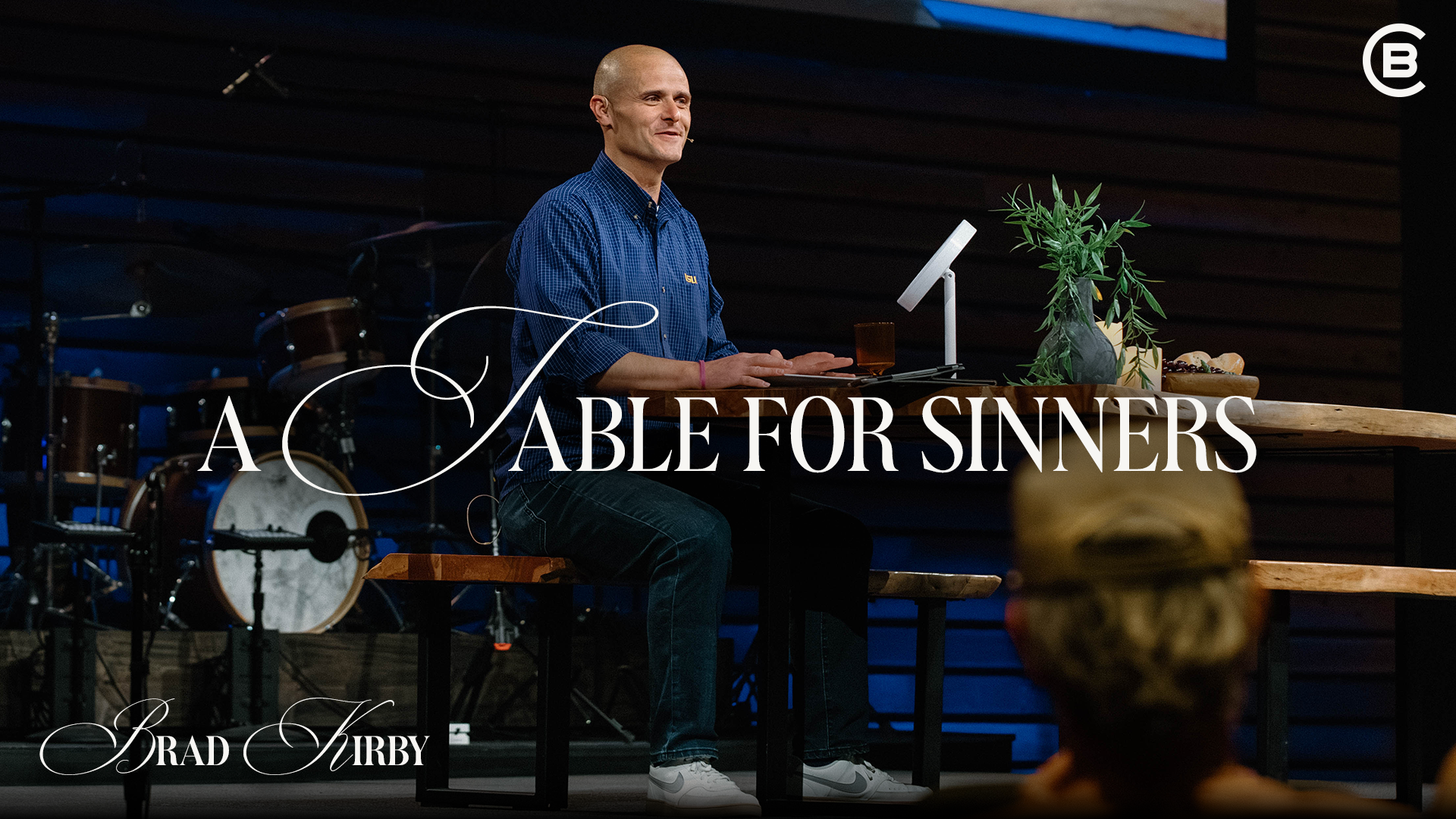
Jesus had a habit that made religious people furious. He shared meals with the exact people everyone else avoided, and in Luke 15 the Pharisees finally say it out loud: this man receives sinners and eats with them. Instead of defending Himself, Jesus tells two short stories about a shepherd who leaves ninety-nine sheep to find one, and a woman who turns her house upside down looking for a single lost coin. In the first message of Table Church, Brad Kirby walks through five things those stories reveal about the heart of God, and why the table Jesus sets is never just about who gets to sit down. Come find out what happens when the heart revealed at that table becomes the heart of a church.
Key Takeaways
God notices who is missing. The shepherd does not think in percentages, he thinks in sheep, and Jesus focuses our attention on the one rather than the ninety-nine who are already safe.
Before you name someone else a sinner, look in the mirror. Every one of us has been the one who wandered, and every one of us needed the heart of God to come looking for us.
God does not wait, He goes. The shepherd goes after the sheep and the woman searches diligently until she finds the coin, and that pursuit ultimately takes Jesus all the way to the cross.
The intensity of the search reveals the value of what is lost. Brad's story about crawling through the mud for an old Frisbee that was priceless to him lands the point better than any statistic could.
Grace says come near, repentance says come home. Jesus receives sinners, but He receives them in order to call them home, and we should never confuse hospitality with spiritual indifference.
Heaven throws a party when one person turns to Jesus. The Pharisees were grumbling about the very thing that makes the Father happy, and the church should sound like heaven, not like the grumbling.
Discussion Questions
When you hear that every one of us has been "the one" who wandered, what does your own story of being found look like?
Where do you catch yourself seeing categories of people instead of actual faces and names?
Who is the empty seat at your table, the person you have quietly stopped praying for or written off?
What would it cost you to go after someone instead of waiting for them to find their way to you?
Have you ever softened truth into niceness with someone you love, and what held you back from saying more?
When someone with a messy story walks into church, is your first instinct closer to the Pharisees' grumbling or to heaven's rejoicing?
This Week's Challenge
Name one person this week and take one concrete step toward them: send the text, make the call, or invite them to your table.
Transcript
A New Series: Table Church
Today we begin a brand new series called Table Church. In Luke and Acts, we see Jesus repeatedly making it a point to share meals. Lots of meals. And interestingly, each time, someone different takes a seat at the table.
Sometimes it is people we would expect, and sometimes it is people who surprise us. At this table we are going to meet sinners, the self-righteous, the proud, the distracted, the outsiders, the overlooked, the broken, people who still have a lot to learn, and people who need grace. We are going to meet people Jesus is calling, shaping, and preparing to send into the world.
Here is the thing. When Jesus invites someone to the table, He does not just meet them where they are. He begins to change who they are.
The Table Isn't Just Furniture
What we are going to discover is that the table is not just furniture. In Luke and Acts, these meals are rarely incidental details. The table becomes a window into the heart of God and a set of instructions for the people of God.
Think about your own home. There are places in your house that strangers may enter and places that only people close to you enter. Amazon might deliver a package to your front porch. Somebody repairing the refrigerator might make it into your kitchen. But when you say to someone, "Come in and sit down at my table. Pull up a chair and eat with us," something changes.
The table communicates welcome and relationship. The table says, "You're not standing outside anymore. Come close."
A Table-Shaped People
So for this series, understand that Jesus is not merely inviting us to sit at His table. He is forming us into a table-shaped people. The gospel gives us a new relationship with God, a new way of living as disciples, and a new posture toward the people around us.
As Christians, we remember that we did not earn our seat. Nobody arrives at Jesus' table because their résumé was impressive enough. As disciples, the table becomes a place where Jesus forms us and the Word of Christ reshapes the way we live. As disciple makers, the table teaches us the missionary rhythm of Jesus, because Jesus moved toward people. And as a church, the table reminds us what kind of family God is creating.
Grab your Bibles and open to Luke 15.
The Crowd Around Jesus
Luke tells us the tax collectors and sinners were all drawing near to hear Him, and the Pharisees and the scribes grumbled, saying, "This man receives sinners and eats with them."
Jesus is likely at a table, or fresh off a meal with some tax collectors and others. He had a real habit of doing this. We see the same accusation in Luke 5.
We tend to read a phrase like "tax collectors and sinners" quickly because we have heard it so many times. But Luke's first audience would have been astonished at those words. Appalled, even. To understand why the Pharisees were so offended, you have to understand who Luke is actually describing.
Who the Tax Collectors Were
Tax collectors were among the most despised people in Jewish society. Rome often outsourced tax collection to local people. It was almost the same thing as someone buying a tax collection franchise. Rome basically said, "Here's what we're owed. You go collect it."
That kind of broad system left plenty of room for shady stuff to happen. Tax collectors had the authority to assess people's property and goods, collect whatever Rome required, and then possibly add a little extra for themselves. Needless to say, they developed a horrific reputation. They were viewed as cheaters, crooks, collaborators with Rome, and traitors to their own people.
So do not picture a mildly annoying government employee with a calculator reminding you that April 15 is coming. Picture someone their neighbors viewed as corrupt and to be avoided at all costs.
Who the Sinners Were
Then Luke adds the word "sinners." That was a pretty broad label. It could mean common people who were not Pharisees. It could mean people known for obvious public sin. It could mean the ritually unclean. Or it could just mean people who did not fit the accepted standards of respectable Jewish life.
Basically, "sinners" was a catch-all for the kinds of people religious society tended to look at sideways and whisper about.
But look at what Luke says about them. He says they were all drawing near. I love that. That is one of the most glorious descriptions of the ministry of Jesus anywhere in the Bible. These messy people with publicly messy lives were not running away from Jesus. They wanted to be closer. They were drawn to Him because almost everyone else rejected them, and He genuinely cared for them.
The Grumbling of the Pharisees
Then Luke introduces another group. The Pharisees and the scribes grumbled, saying, "This man receives sinners and eats with them."
Immediately you notice a contrast. One group wants to hear Jesus. The other group is offended by whom Jesus is willing to hear. And more specifically, they are upset that Jesus had the audacity to eat with them.
In first century Jewish culture, and even the wider Mediterranean world, eating with someone meant more than grabbing a meal. The table communicated a kind of social acceptance. Jesus was not just preaching to "those people" from a safe distance and then sending them home before dinner. He was sitting down with them. Sharing the table with them. To many Pharisees, holiness meant keeping clear boundaries from people considered unclean. Jesus was doing the exact opposite.
Scandalous
It was not just, "Jesus talks to sinners." It was, "Jesus welcomes sinners to His table." Those words we cherish, "this man receives sinners," the Pharisees found disgusting.
Kevin DeYoung puts it this way. It would be one thing to see your pastor at Starbucks engaged in obvious ministry with a bunch of notorious sinners. Some might think, "There's my pastor reaching out, buying them coffee on the church credit card, doing an evangelistic Bible study. Terrific." But imagine finding out he was not just having a quick evangelistic conversation. He had invited them to dinner. They were walking through his front door. He was sitting at his dining room table with them, laughing with them, listening to their stories, treating them like people worth knowing, and everybody in town knew about it.
Scandalous.
Two Stories That Reveal the Heart of God
Jesus is just doing what the Father sent Him to do. The Son of Man came to seek and to save the lost.
Jesus hears the grumbling from these religious elite. "Jesus, why are You like this? How could You welcome these people? Why do You eat with sinners?" So He tells them a couple of stories. One about a shepherd and one about a woman. Not random stories, but stories that reveal the heart of God.
Both parables follow the same simple but powerful movement. Something is lost. Someone searches. And when what was lost is found, there is joy. In the first story, a sheep wanders away and cannot find its way back. In the second, a coin is lost and is completely helpless to recover itself.
Lost, Search, Joy
The circumstances are different, but the condition is the same. What is lost will remain lost unless someone goes looking for it. That is the picture Jesus gives us of our spiritual condition. We do not simply need better directions. We need to be found.
Then the emphasis shifts from the thing that is lost to the heart of the one who searches. The shepherd goes after the sheep until he finds it. The woman lights a lamp, sweeps the house, and searches diligently until she finds the coin. Neither one shrugs at the loss as if it is no big deal.
And when the lost is finally found, the response is not relief alone. It is joy. Heaven itself rejoices. Lost. Search. Joy.
Five Things About the Heart of God
Jesus does not give us these parables to show how lost things get found. He is showing us something about the heart of God. These parables pull back the curtain and let us see what God is like toward people who are far from Him. They show us what He values, what He pursues, what He desires, and what brings Him joy.
If we are going to be the kind of church Jesus is calling us to be, then we cannot simply admire the heart of God from a distance. His heart has to become our heart.
So I want us to look at five things these parables teach us about the heart of God. And as we walk through them, notice that Jesus tells these two stories with intentional similarities. The same ideas show up again and again in both.
1. The Heart of God Values the One
There are a hundred sheep, but Jesus focuses our attention on one. There are ten coins, but Jesus focuses on the one.
From a purely numerical standpoint, ninety-nine out of a hundred sounds pretty good. If I told you we had a 99 percent success rate in almost any area of life, you would be thrilled. Ninety-nine percent on a test? That one goes on the fridge. Ninety-nine percent approval rating? You are running for office. Ninety-nine percent of your sheep accounted for? Most of us who are not shepherds would probably say, "Good job."
That is not how the shepherd thinks. The shepherd does not think in terms of percentages. He thinks in sheep. The one is not disposable simply because ninety-nine remain.
God Sees People, Not Categories
Jesus' emphasis goes deeper than economics. The shepherd searches because that particular sheep belongs to him and matters to him. And that is the first glimpse Jesus gives us into the heart of God. God notices who is missing.
The Pharisees see categories. Tax collectors. Sinners. Unclean people. Troublemakers. People they do not want around.
God sees people. He sees the one. He sees faces. He knows names. He knows stories.
So why doesn't God just settle for the ninety-nine? Why not say, "I've got plenty"? Because lost people are not interruptions to God. They matter to Him.
This Is Our Story Too
Before we are tempted to think only about those lost people out there, Jesus forces us to look in the mirror.
Throughout this series, the placemat at this table is going to represent something from the passage, something Jesus wants us to see, understand, or become. And this week, it is a mirror.
Before we start thinking about who the lost are, we have to see ourselves. The truth is, every one of us has been the one. Every one of us has wandered. Every one of us has needed to be pursued. Every one of us has needed the heart of God to come looking for us. All we like sheep have gone astray, and we have turned every one to his own way.
Not just the obviously bad people. Not just the dramatic testimonies. All.
The Table Callback: There Is Room for the One
I imagine the Pharisees could understand that tax collectors were lost sheep. Their problem was that they could not imagine religious people might be lost too. Scripture's diagnosis of wandering includes the religious as well as the irreligious.
The Pharisees looked at people and saw categories. Jesus saw the one. When we look at this table, we cannot just see seats. We have to see people. Faces. Names. Stories.
Before we put somebody else's name on this placemat marked SINNER, we need to remember: this was our seat. When we were lost, God did not look at the ninety-nine and say, "I've got enough." He valued the one. He welcomed us. He pulled out a chair. There is room at His table for you.
His heart values the one.
2. The Heart of God Pursues the Lost
The heart of God does more than value the one. He takes action.
Jesus describes the shepherd who goes after the one that is lost until he finds it. Then He tells the story of the woman who lights a lamp, sweeps the house, and seeks diligently until she finds it.
Look at the parallel. The shepherd goes. The woman searches.
God's heart is not passive toward the lost. He does not merely stand at a distance saying, "Well, they know where I am." He moves toward them.
What Ezekiel 34 Warns Us About
In Ezekiel 34, God rebukes Israel's shepherds because they failed to seek the lost. They fed themselves. They ate the fat and clothed themselves with the wool, but they did not feed the sheep. The weak they did not strengthen. The injured they did not bind up. The lost they did not seek. And the sheep were scattered with none to search for them.
If we are paying attention, Ezekiel 34 can start sounding uncomfortably familiar. A church can get very good at feeding itself. Protecting itself. Taking care of the people already in the fold, while the weak stay weak, the hurting stay wounded, and the lost remain unsearched for.
That is what God is condemning. They cared for themselves while the sheep scattered.
I Myself Will Search
Then God makes some amazing promises. "Behold, I, I myself will search for my sheep and will seek them out." As a shepherd seeks out his scattered flock, so will God seek out His sheep and rescue them from every place they have been scattered. He says, "I will seek the lost, and I will bring back the strayed, and I will bind up the injured, and I will strengthen the weak."
The search is relentless. There is no time to rest. The lost must be found.
The Pharisees ask, "Why are You near these people?" Jesus answers, "Because this is what the shepherd does. He seeks sheep." That is what God is like.
The Intensity of the Search
Notice the little phrase Jesus repeats. "Until he finds it." "Until she finds it." That is persistence. The shepherd does not make one lap around the pasture and call it a day. The woman does not glance under the table and say, "Oh well." She turns the house upside down.
I lost a special Frisbee disc I had given Emily. To everyone else, it was a cheap old Frisbee. To me, it was priceless. Why did I spend nearly an hour crawling through the mud looking for it?
Because the intensity of the search reveals the value of what is lost.
Jesus says that is what the heart of God is like. He pursues. He seeks. He moves toward.
Luke 15 Points Us to Calvary
Ultimately, that pursuit takes Jesus all the way to the cross. The Good Shepherd does not merely walk into the muddy, chigger-filled ditch looking for frisbees and coins and sheep. "I am the good shepherd. The good shepherd lays down his life for the sheep."
Luke 15 is pointing us toward Calvary.
How far will God go for the lost? Far enough to take on flesh. Far enough to sit at sinners' tables. Far enough to be misunderstood by religious people. Far enough to carry a cross. Far enough to give His life.
That is the heart of God.
The Table Callback: The Table Doesn't Wait
It is possible to sit at the table of our lives, enjoy the meal, enjoy the people already here, and forget who is missing. But Luke 15 will not let us do that. The heart of God does not simply set the table and say, "If they want to come, they know where we are."
Table Church cannot just mean, "There's room here. Come find us if you like." It also has to mean, "We are willing to go find the people who are missing." Maybe that means crossing the street. Sending the text. Making the call. Inviting someone to lunch. Opening your home.
The empty seat at the table represents somebody. So the question is not only, "Is there room at my table?" The question is, "Who am I willing to get up from the table and go after?"
3. The Heart of God Desires Repentance, Not Just Proximity
This is where we have to be careful. If we say only that God values the lost and pursues the lost, someone might conclude that Jesus' message is simply, "God accepts whatever path you are on."
Notice that is not where Jesus' stories end. Both parables land on the same word. There will be more joy in heaven over one sinner who repents than over ninety-nine righteous persons who need no repentance. There is joy before the angels of God over one sinner who repents.
The goal is not just proximity to Jesus. The goal is repentance and restoration. Jesus receives sinners, absolutely. But He receives sinners in order to call sinners to repentance. To bring them home.
Grace Is Not Permission to Remain Lost
We must never confuse Christian hospitality with spiritual indifference. Jesus' table is a table of grace, but grace is not permission to remain lost.
Kevin DeYoung says we need to be mindful of the need for both relationships and repentance, and that this will be a great challenge for the church in the years ahead. It will not be hard to have a church that is good at relationships. It will not be hard to have a church that is good at telling sinners to repent. What will be hard is to have people who, like Jesus, are full of relationships with outsiders and also bold to talk about repentance.
Jesus associated with sinners, but He never offered cheap grace. He did not participate in their sin or condone it. And yet He never apologized for being on the inside with outsiders. It was His mission.
Friend of Sinners
What kind of doctor refuses to see patients? What kind of farmer refuses to get his hands dirty? What kind of church has no room for sinners?
People reviled Jesus and called Him a glutton and a drunkard, a friend of tax collectors and sinners, because He received people like this. We have all been called names. As a pastor, I have been called a lot of names. But how many times have you or your church been called a friend of sinners? I doubt many Christians have. The world is not saying, "Would you look at those folks at CityBridge, they are friends of sinners."
Why not? Do we fear contamination more than we put confidence in Christ's power to cleanse?
Grace Says Come Near, Repentance Says Come Home
Jesus gets close, and Jesus calls people to turn. Grace says, "Come near." Repentance says, "Come home." Those are not enemies. That is the love of God.
If somebody I love is driving their car into a tunnel of one-way traffic, love does not say, "I affirm whatever direction you've chosen." Love says, "Stop. Turn around. Come back."
That tells us something extraordinary about God's heart. God does not desire your destruction. God desires your restoration.
The Table Callback: The Table Is for Coming Home
Jesus does not invite sinners to the table simply so they can stay exactly where they are. He welcomes us close enough to hear His voice, experience His grace, and be lovingly called to turn from sin.
Table Church cannot mean, "Come sit down, nothing needs to change." It means, "Come sit down. There is grace here. There is truth here. Jesus loves you too much to leave you lost." This table is not a place where sin is ignored. It is a place where sinners are welcomed, forgiven, restored, and made new.
So the question is not merely, "Will we make room for sinners?" The deeper question is, "Will we love people enough to welcome them close and still lovingly call them to turn from sin? Call them home?"
At the table of Jesus, grace and repentance sit side by side.
4. The Heart of God Rejoices When the Lost Come Home
Luke 15 rewrites our perception of repentance. We often hear the word repentance and imagine God standing with folded arms saying, "Cry harder. I'm not convinced yet. You need to be miserable a little longer."
Jesus presents repentance as the beginning of a party.
Thabiti Anyabwile said it well. Repentance is not merely a duty people perform. It is not merely the hard part. It is not just leaving behind things we once enjoyed. It is not just the unpleasant conversation saints must have with sinners. Repentance is a fountain of joy in heaven. Nothing prompts a party in heaven like the turning of a soul from sin to the Savior.
Rejoice With Me
Something good happens at an LSU game. When LSU scores, you immediately look for somebody, a friend, a family member, a complete stranger, because somehow the joy gets bigger when you share it. Last night after LSU beat Clemson 51 to 10, there was apparently a lot of joy that needed to be shared. At some point it stopped feeling like a football game and started feeling like Clemson had accidentally signed up to be the illustration.
That is exactly what happens in these parables. The shepherd finds the sheep and says, "Rejoice with me." The woman finds the coin and says, "Rejoice with me."
God shares His joy with the angels.
Your Own Heavenly Parade
God is calling together the angels, Michael, Gabriel, and thousands of others whose names we do not know, and He is calling them to a party. Come, celebrate, rejoice. Repentance is the occasion for your own personal heavenly parade. I have been in a few parades, but I have never had my own parade. Never had ticker tape just for me, fireworks just for me, music just for me. But that is the scene in heaven every time a sinner repents.
Here Jesus is driving a knife into the Pharisees' complaint. What a contrast from verse 2. Pharisees grumbling. Heaven rejoicing. Jesus is intentionally saying, "You're angry about the very thing that makes My Father happy." That is devastating for them.
So whose heart do you have?
What Do We Think First?
What moves God should move His people. What causes heaven to celebrate should cause the church to celebrate.
Imagine someone walks into this church whose story is messy. Everybody knows what they have done. Everybody knows what they believe and how they live, and maybe what they have said about Christianity. And now they have come near. Awkwardly. Suspiciously. They do not know the church lingo, the rules, the songs, the verses.
What do we think first? "Why are they here?" Or, "Could this be the one we have been looking for, praying for, sharing with?"
The heart of God does not say, "There goes the neighborhood." The heart of God says, "Maybe somebody is coming home."
The Table Callback: The Table Should Sound Like Heaven
When somebody comes home to Jesus, this table should not be quiet. It should sound like the shepherd. Like the woman. Like heaven. "Rejoice with me."
We do not look at the empty chair and say, "Do they really belong here?" We say, "Thank God grace brought them here."
So here is the question I want us to sit with. Does our table sound more like the grumbling of the Pharisees, or the rejoicing of heaven?
5. The Heart of God Becomes the Heart of His People
Jesus has not shown us the heart of God merely so we can admire it. He shows us the heart of God so that His heart becomes ours.
Look at how He frames both stories. "What man of you, having a hundred sheep." "Or what woman, having ten silver coins." Who among you? Suppose one of you. Jesus is using that language to pull His audience, the crowd, into the role of the shepherd.
Jesus does not want us to just understand the story. He wants us to participate in it. He does not want us to just know His mission to seek and save the lost. He wants us to participate in it.
What Table Church Looks Like
If God's heart values the one, then His people cannot treat people like numbers. If God's heart pursues the lost, then His people cannot just sit and wait for lost people to wander into our building on their own. If God's heart desires repentance, then we cannot substitute niceness for gospel truth. If God's heart rejoices when sinners come home, then the church ought to throw a holy party when Jesus brings someone to resurrection life.
That is what Table Church looks like.
The Table Callback: The Heart at the Table Becomes Our Heart
The goal is not merely to put a table on a stage. The goal is for the heart revealed at this table to become the heart of this church.
So let me leave you with a few questions. Who matters to God but has become invisible to you? Who have you stopped praying for? Who have you written off?
And here is the one I want you to carry home. Who might sit at your dinner table before they ever sit in a church pew?