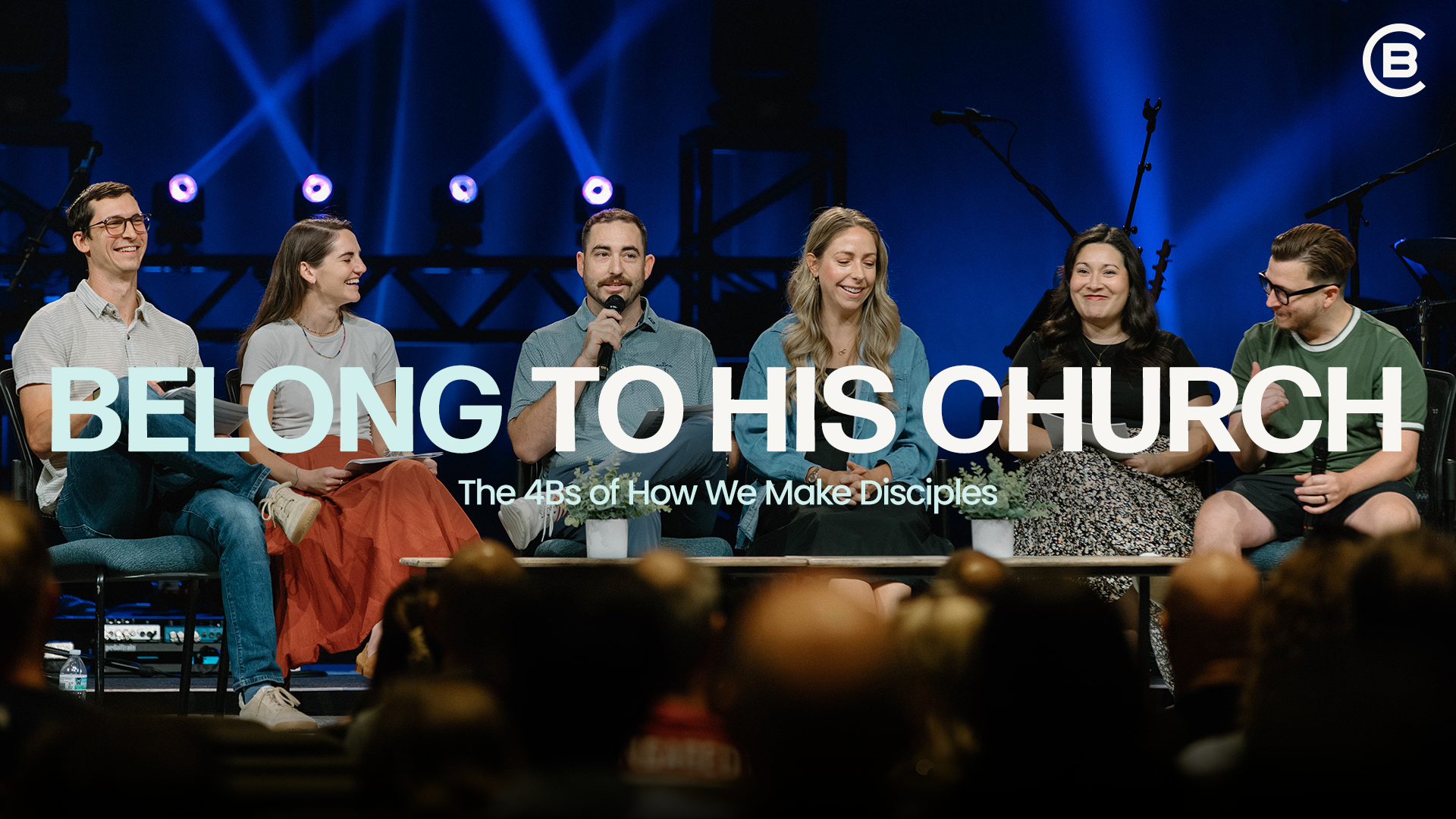
Belong to His Church
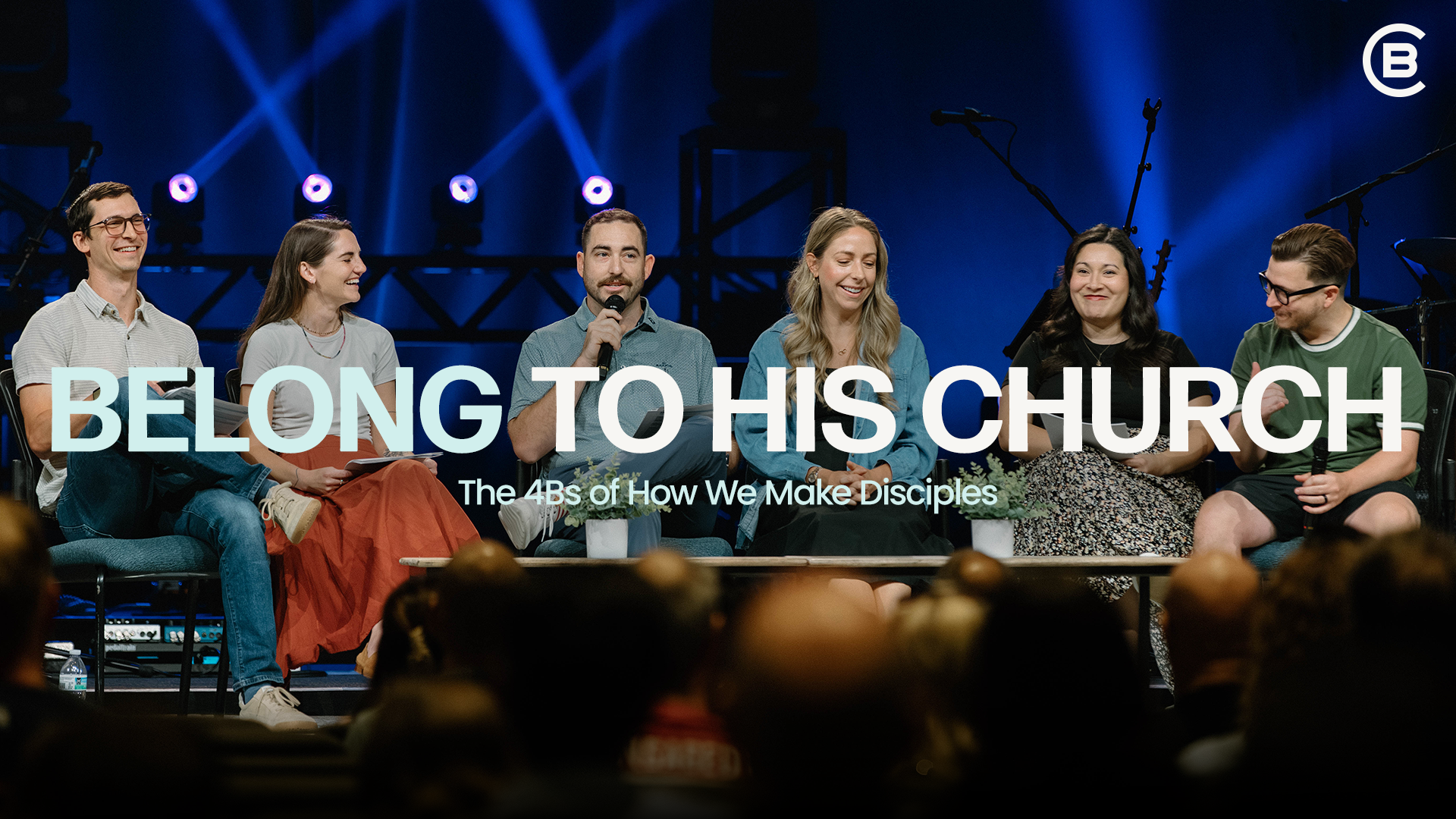
Sermon Notes
You can go to church every week and still be completely unknown.
That is not the life God designed. In Acts 2, the first Christians didn't just share a room. They shared their homes, their meals, and their burdens. Brad Kirby walks through Acts 2:42–47 and the difference between attending a church and belonging to one. Because you can't become who God made you to be on your own.
Key Takeaways
You can't be your best self by yourself. God uses other people to draw out what He has put in you.
Belonging is different than attending. You can know the songs, the sermons, and every face in the lobby and still keep everyone at a distance.
Real community is costly, and it is joyful. It will inconvenience you, and it will become some of the deepest joy you know.
Your community group is bigger than your community group. Jesus said the world would know His followers by how they love each other.
Discussion Questions
When you look at your week, do you feel more like you attend a church or like you belong to one?
Who in your life actually knows your story, including the parts you would rather keep hidden?
Where do you tend to keep people at a distance, and what makes that feel safer?
Who has God used to draw something out of you that you couldn't yet see in yourself?
What would it look like this season to move toward someone instead of waiting for them to move toward you?
Is there a burden you are carrying alone right now that you could invite someone to help you carry?
This Week's Challenge
Tell one trusted person honestly how you are actually doing, and give them real access to that part of your life.
Transcript
You Can Attend and Still Not Belong
Let me tell you a crucial truth I have learned about church along the way. You can attend church every week and still never truly belong. You can know the songs, know the sermons, know the people in the lobby, and sit in the same section every Sunday, and still keep everyone at a distance. It happens all the time. And that is not the picture of discipleship we see in Scripture.
Over these four weeks in Made Here, we are looking at the four ingredients of discipleship. Believe in Christ. Belong to His Church. Be Equipped in His Word. Be Engaged in His Mission. Today we are talking about that second one. And let me be clear from the beginning. When we point you toward community, we are not trying to get you into another program. God is calling His people into community.
You Can't Be Your Best Self By Yourself
God never designed the Christian life to be lived alone. Yes, God saves us personally. He knows your name. He calls you. He redeems you. But when He saves you, He does not leave you by yourself. He saves you into a family, a household, a body.
So here is one sentence I want you to remember today. You can't be your best self by yourself. And by best self, I do not mean some self-help version of you. I mean the person God is forming you to become in Christ. There are parts of spiritual maturity that simply cannot be developed on your own. So the real question today is not, do I go to church? The question is, am I known? Am I knowing others? Am I actually sharing life with the people of God?
God Designed Us for Community
In Acts 2:42–43, Luke tells us they devoted themselves to the apostles' teaching and the fellowship, to the breaking of bread and the prayers. This is more than a snapshot of a church service. It is a picture of a people whose whole lives had been rearranged and reordered around Jesus.
Notice this. Biblical community is not community for community's sake. Jesus is at the center. I love the sequence here. The gospel is preached, people repent, people believe, and then almost immediately they begin sharing life. Acts calls this the fellowship, and it is so much more than hanging out. They learned together, prayed together, ate together, opened their homes, and met needs together. Their faith was deeply personal, but it was never private.
You Cannot Obey the “One Anothers” From a Distance
That is why so much of the New Testament is written in the language of “one another.” Love one another. Serve one another. Bear one another's burdens. Encourage one another. Confess sin to one another. Hebrews 10:24–25 calls us to stir one another up to love and good works, not neglecting to meet together, but encouraging one another.
Here is what we learn. You cannot obey the “one anothers” of Scripture from a distance. You cannot carry a burden you do not know about. You cannot encourage someone through a struggle they have never let you see. We live in a culture that says, my life, my truth, my choices, nobody tells me what to do. Following Jesus is different. It means surrendering not only our sin, but our insistence on being completely self-sufficient.
God Puts Something In You and Draws It Out Through Others
Think about the most significant things God has done in your life. How many of them involved another person? Someone encouraged you when you were ready to quit. Someone challenged you when you were heading the wrong way. Someone saw something in you that you could not yet see in yourself.
Proverbs 20:5 says the purpose in a man's heart is like deep water, but a man of understanding will draw it out. There are seasons when we have desire but still need development, ability but still need wisdom, strength but still need direction. In those moments, God's provision is often not simply more information. Sometimes God's provision is a person. Every mature follower of Jesus you admire had people who helped form them. As Matt Wideman says, every GOAT was once a lamb.
Temple and Tables
Acts 2:44–46 tells us their community became tangible. They cared for one another as any had need. That means somebody had to actually know the need. It is one thing to sit beside someone in a service. It is another to know their marriage is struggling, that they lost a job, or that they are grieving something they cannot carry alone.
And notice where this life happened. They gathered in the temple, and they broke bread in their homes. There was temple, and there were tables. There was the large gathering, and there was life in homes. We need both. Sunday morning matters. We worship together and sit under God's Word together. But the early church did not expect everything God intended for His people to happen only in the large gathering.
Community Groups Are Different
This helps explain something distinct about CityBridge. We have all kinds of places to connect and grow. Men's Bible Study, Women's Bible Study, NEST, classes, equipping opportunities, serving teams. Those are all valuable. But Community Groups have a particular purpose.
Many of us grew up around Sunday school, and Sunday school can be wonderful. But larger, open groups naturally tend to center on information and discussion. Biblical community has to go beyond simply knowing more Bible. That is why our Community Groups are not primarily another Bible study. God's Word shapes everything, but the goal is not information transfer. The goal is life-on-life transformation. It means somebody knows enough about your life to ask, how are you really doing? How is your marriage? What are you afraid of? How can I pray?
Real Community Is Costly, Messy, and Joyful
Acts 2 says they met needs as any had need. That is costly community. They were not asking, how little can this relationship require of me? Sometimes love looks like, I will bring dinner, I will sit with you at the hospital, I will have the hard conversation. We want groups to be safe, but safe does not mean nobody ever makes you uncomfortable. Safe means you can tell the truth and stop managing an image.
Real community is also messy. Corinth, Galatia, and Philippi were beautiful and messy churches full of redeemed people still being sanctified, just like us. Healthy community is not community without problems. It addresses problems biblically and grows through them. And do not miss the joy. In Acts 2:46 they ate with glad and generous hearts. Community is both costly and joyful.
How We Pursue That At CityBridge
At CityBridge, we have put six phrases around the kind of life we are pursuing in Community Groups. We devote daily, because no group can abide in Christ for you. We pursue relationally, because deep relationships rarely happen by accident. We counsel biblically, asking not just what I think but what God's Word says. We live authentically, bringing our struggles into the light instead of managing an image. We admonish faithfully, encouraging one another and lovingly correcting when needed. And we engage missionally, refusing to become a closed circle that exists only for the comfort of the people already in it.
That is what we are after. A community where people can be known, loved, challenged, cared for, sharpened, and sent. God forms us through His people.
God Displays Jesus Through Community
Acts 2:47 says they were praising God and having favor with all the people, and the Lord added to their number day by day those who were being saved. Their life together had become visible. People saw something different. They saw generosity, open homes, needs being met, and lives radically rearranged because of Jesus. God used the witness of that church to draw people to Himself.
So your community group is bigger than your community group. In John 13:35, Jesus says the world will know we are His disciples by our love for one another. Not perfect people. Not people who never disagree. But people who forgive, carry burdens, sacrifice, tell the truth in love, and stay when things get hard. That is why the church is not merely something we go to. The church is something we belong to.
Belong, Don't Just Attend
So let me leave you with three questions. Who knows your story? Who are you helping to grow and disciple? Are you connected beyond Sunday morning? Those questions matter, because it is possible to sit in a room with thousands of people every weekend and still be completely alone.
That is not the life God designed for us. So do not settle for simply attending His church. Belong to His church. Let yourself be known. Take the risk of knowing somebody else deeply. Carry someone else's burden, and be humble enough to let somebody carry yours. Give people permission to encourage you, challenge you, pray for you, and help draw out what God is producing in you. Because you can't be your best self by yourself.