Believe in Christ
Sermon Notes
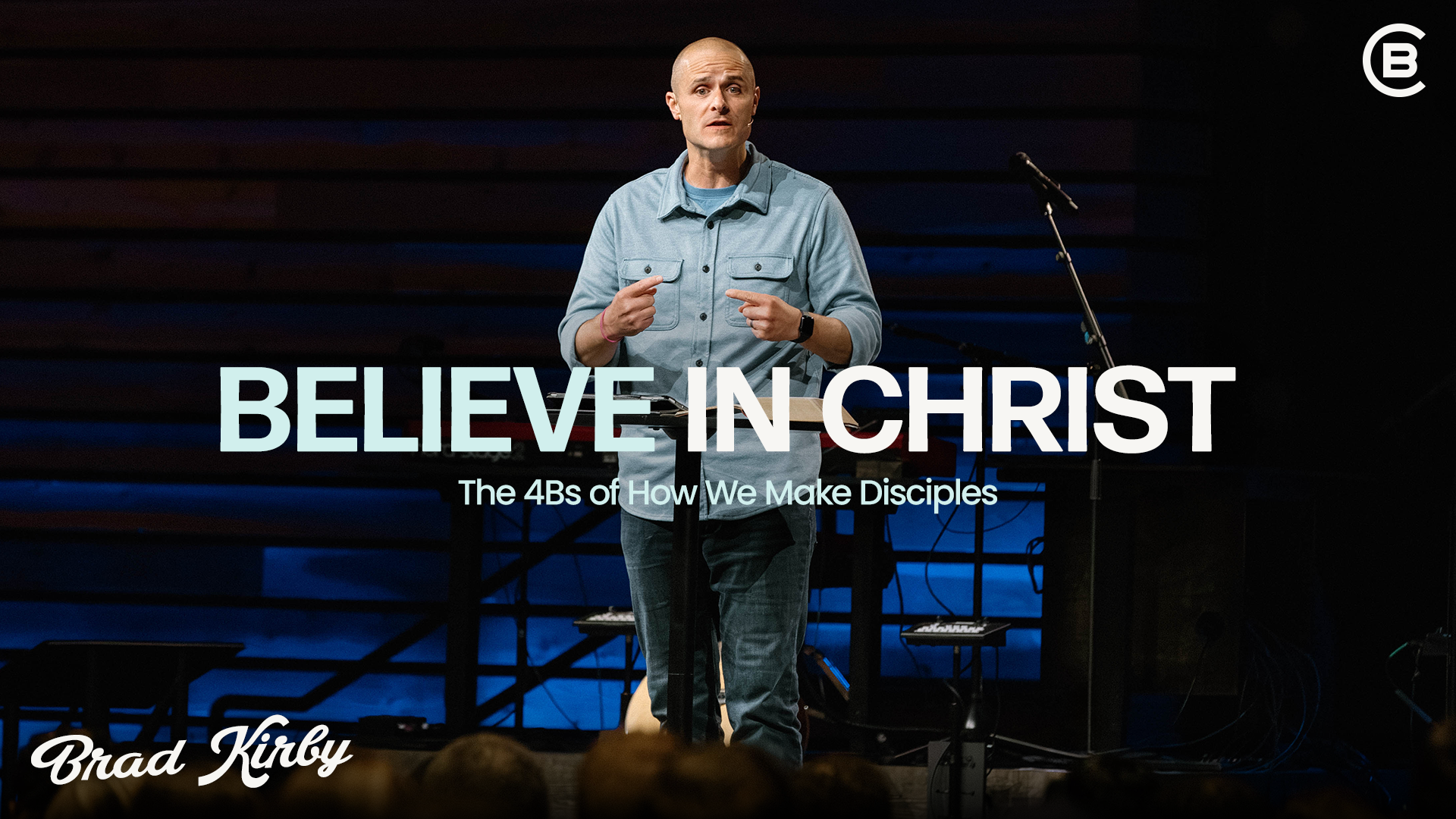
The longer we've been around church, the easier it is to let the most stunning news in the world start to feel ordinary. In the opening message of Made Here, Brad Kirby walks through Ephesians 2 to answer a question underneath everything else: what does it actually mean to believe in Christ? He shows that we didn't come to God as basically good people who needed a little help. We came as people who were spiritually dead and needed to be made alive. This is the story of a God who was rich in mercy and moved toward us, and it's where the whole journey of following Jesus begins. Come see why grace is worth being amazed by all over again.
Key Takeaways
The gospel should still stop us in our tracks. We can wear the cross, hang the cross, and sing about grace so often that we forget a real man on a real cross gave His real life for us.
We were dead, but God made us alive. Paul's diagnosis in Ephesians 2 is that we were dead in sin and could not fix our own condition, and the two greatest words in the Bible answer that: but God, being rich in mercy, made us alive with Christ.
Salvation is a gift you receive, not a wage you earn. Grace means God gives us what we could never earn, and faith means we open our hands and receive it, which is why your past and your failure cannot disqualify you.
Grace saves us, then grace sends us. We are not saved by good works, we are saved for them, and the same God who brought us from death to life gives that new life direction.
Discipleship starts with what Jesus has done, not what you do. Believing in Christ is not the finish line, it's the first ingredient in becoming a disciple who makes disciples.
Discussion Questions
When you hear "Jesus died for me," does it still move you, or has it started to feel familiar, and why do you think that is?
Paul says we were "dead" in sin, not just struggling. How does that change the way you think about what you needed from God?
Where in your life are you most tempted to try to earn what God says is already a gift?
What would it look like this week to live "from" God's acceptance instead of working "for" it?
If good works are the fruit of grace and not the root, where is God growing that fruit in you right now?
Brad said you cannot out-sin the cross. Is that a truth you actually believe about yourself, and what makes it hard to?
This Week's Challenge
Take five minutes this week to write out the gospel in your own words, simply enough that you could share it with someone without notes or panic.
Transcript
When We Forget What the Cross Cost
I think one of the great dangers of being a Christian for any length of time is that we forget. We know the story in our minds. Jesus came, He died, He rose again. We know the verses, we sing the songs, we say "Amen." We wear the cross, we hang the cross, we build the cross, and somehow we can still forget what the cross actually cost.
If we're not careful, something that should take our breath away becomes familiar, ordinary, forgettable. The cross becomes décor for our houses. The blood becomes vocabulary. "Jesus died for my sins" rolls off our lips so easily that we forget it should stop us in our tracks. Friends, a real man, on a real cross, gave His real life for us. All these things actually happened.
He Wasn't a Victim
Here is where we have to be clear. Jesus wasn't simply a tragic victim. He wasn't caught in the wrong place at the wrong time. He willingly gave Himself. In John 10 He says no one takes His life from Him, but He lays it down of His own accord. He knew what the cross would cost, and He went anyway.
Why? Because He loved us. We were sinful, guilty, and separated from God, but Jesus came to do for us what we could never do for ourselves. That cross was ours. The guilt was ours. The judgment was ours. He took it. You could not get to God, so God came to you. You could not pay the debt, so Jesus paid it. That is the gospel.
Made Here
Today we begin a series called Made Here, where we remind ourselves what we're really doing here as a church. Too often we treat church like everything except what Jesus intended. Like a movie theater, we come to be entertained. Like Walmart, we shop for the preaching and music we like. Like a gas station, we pull in once a week for a spiritual fill-up, then go back to life as usual.
But the church is not here to create customers or spectators. Jesus told us to make disciples. People who follow Him, become like Him, and help others do the same. The goal is not more attenders. It's disciples who make disciples who make disciples. Over four weeks we're going to walk through how that happens, and it starts with the first B. Believe in Christ.
We Were Dead in Sin
Paul starts Ephesians 2 with a diagnosis none of us would put on a coffee mug. You were dead in your trespasses and sins. Not confused. Not struggling. Not spiritually under the weather. Dead.
Dead people have a serious problem. It's not just that they're dead. It's that they can't fix their condition. You can give a sick person medicine and a tired person a vacation. But you cannot walk into a funeral home, hand someone a self-help book, and say, "You've got this." A dead person doesn't need motivation or better habits. A dead person needs life.
That's Paul's diagnosis of all of us apart from Jesus. Our deepest problem isn't that we make bad choices. Our problem is sin, and sin separates us from the God who is the source of life.
But God, Rich in Mercy
Then Paul writes two of the greatest words in the Bible. But God. You were dead, but God. You were lost, but God. You were trapped in sin, but God. You could not save yourself, but God.
The gospel is not the story of humanity finally finding its way to God. It's the story of God coming for us. Paul says, "But God, being rich in mercy, because of the great love with which He loved us." Notice he doesn't just say God has mercy. God is rich in mercy. It's not something He has to be talked into.
Mercy means God does not give us the judgment we deserve. And He gave that mercy not to people who earned it, but to people who desperately needed it. We brought the sin. God brought the mercy.
He Made Us Alive
Even when we were dead in our trespasses, Paul says, God made us alive with Christ. Think about Lazarus. He had been in the tomb four days. He wasn't weak or sick. He was dead. Jesus didn't stand outside the tomb and shout, "Lazarus, do better, try harder, get your life together." He simply said, "Lazarus, come out." And a dead man walked out of a grave.
That's the picture of the gospel. We were dead, but God made us alive with Christ. This is not spiritual remodeling. Jesus isn't hanging new cabinets in the old you. He makes you new. In Christ you are forgiven. In Christ you are accepted. In Christ you are adopted. In Christ you are alive. Your life becomes a trophy of grace, so people can see what Jesus can do.
Saved by Grace Through Faith
Paul could not make it clearer. Salvation is a gift. Not a paycheck. Not a trophy. Not a reward for religious people who finally got it right. A gift. Grace means God gives us what we could never earn. Faith means we open our hands and receive it.
And faith is more than believing facts about Jesus. You can believe a chair will hold you, but faith is when you actually sit down. Biblical faith means putting the full weight of your life on Jesus. Church attendance can't do that for you. You can know the songs and the verses and grow up in a Christian home, but nobody can trust Jesus for you.
So hear this. Your past does not disqualify you. Your failure does not disqualify you. You cannot out-sin the cross. Salvation is not achieved. It is received.
Created for Good Works
Paul is clear that good works do not save us. But saved people do good works. We are not saved by good works. We are saved for good works. Good works aren't the root of salvation. They're the fruit of it.
Paul says we are God's workmanship. God isn't just rescuing us from something. He's remaking us for something. He takes selfish people and teaches them to serve. He takes consumers and turns them into contributors. He takes spectators and turns them into disciples.
Grace doesn't just change where you're going when you die. Grace changes how you live while you're alive. Jesus said to let your light shine before others, so they may see your good works and give glory to your Father in heaven. Grace saves us, and then grace sends us.
The Mission Mountain
So where does this leave us as a church? Let me give you a picture. I think of the church like a mountain. I call it the Mission Mountain. At the very top, at the summit, is the mission, because that's always where we're headed.
And here's the good news. I didn't have to invent it. Jesus gave it to us 2,000 years ago in Matthew 28. Our mission is simple and unchanging. To call all people to become fully devoted followers of Jesus Christ. That's the top of the mountain, and as your pastor, my job is to keep pointing, over and over, right to the top.
At the base of the mountain are our values. Authenticity. Bible-Based. Community. Discipleship. Engage. They're the foundation, and the mountain only stands as high as its foundation is strong.
The 4Bs: Our Strategy for Making Disciples
Passion without strategy is like charging up a mountain with no trail map. You'll sweat, you'll scramble, but you'll end up nowhere near the summit. So how are disciples actually made? CityBridge already has a strategy. It's called the 4Bs. Not new. Just rediscovered, like finding cash in an old coat pocket.
Think of it like baking chocolate chip cookies. You can have the flour, the sugar, the eggs, the butter. But leave out the chocolate chips and that's just a sad sugar cookie. Disciple-making takes all four ingredients. Believe in Christ. Belong to His Church. Be Equipped in His Word. Be Engaged in His Mission. Not three out of four. Not your favorite two. All four. That's not just a framework. That's our pathway forward, and this fall we're walking it together.